16 Japandi Kitchen Ideas That Feel Calm, Warm, And Effortlessly Modern
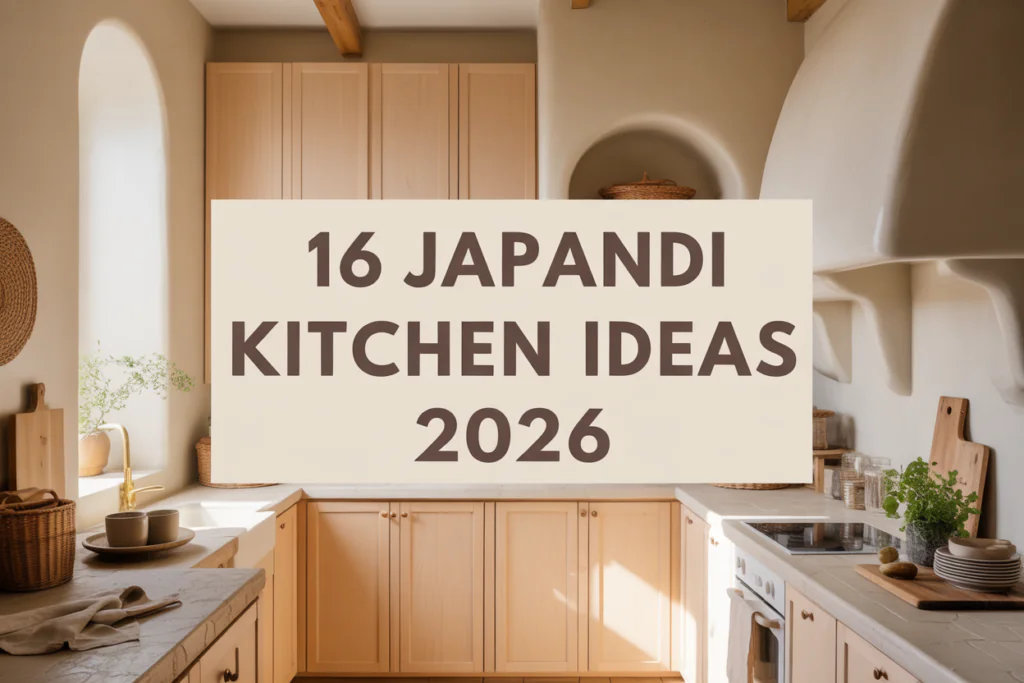
A beautifully designed Japandi kitchen feels peaceful the moment you walk into it. It combines the warmth and simplicity of Scandinavian interiors with the calm, intentional philosophy of Japanese design. The result is a space that feels minimal without being cold and elegant without trying too hard.
In 2026, homeowners are moving away from overly polished kitchens and embracing softer, more natural interiors instead. That is exactly why Japandi Kitchen Ideas continue growing in popularity. These kitchens focus on organic textures, warm wood tones, muted colors, natural light, and clutter-free layouts that make everyday life feel calmer.
The best part about Japandi design is that it works in almost any home style. Whether your kitchen is modern, rustic, compact, or open concept, these ideas can help you create a space that feels timeless, cozy, and deeply functional.
1. Use Warm Wood Cabinets For A Japandi Kitchen Design
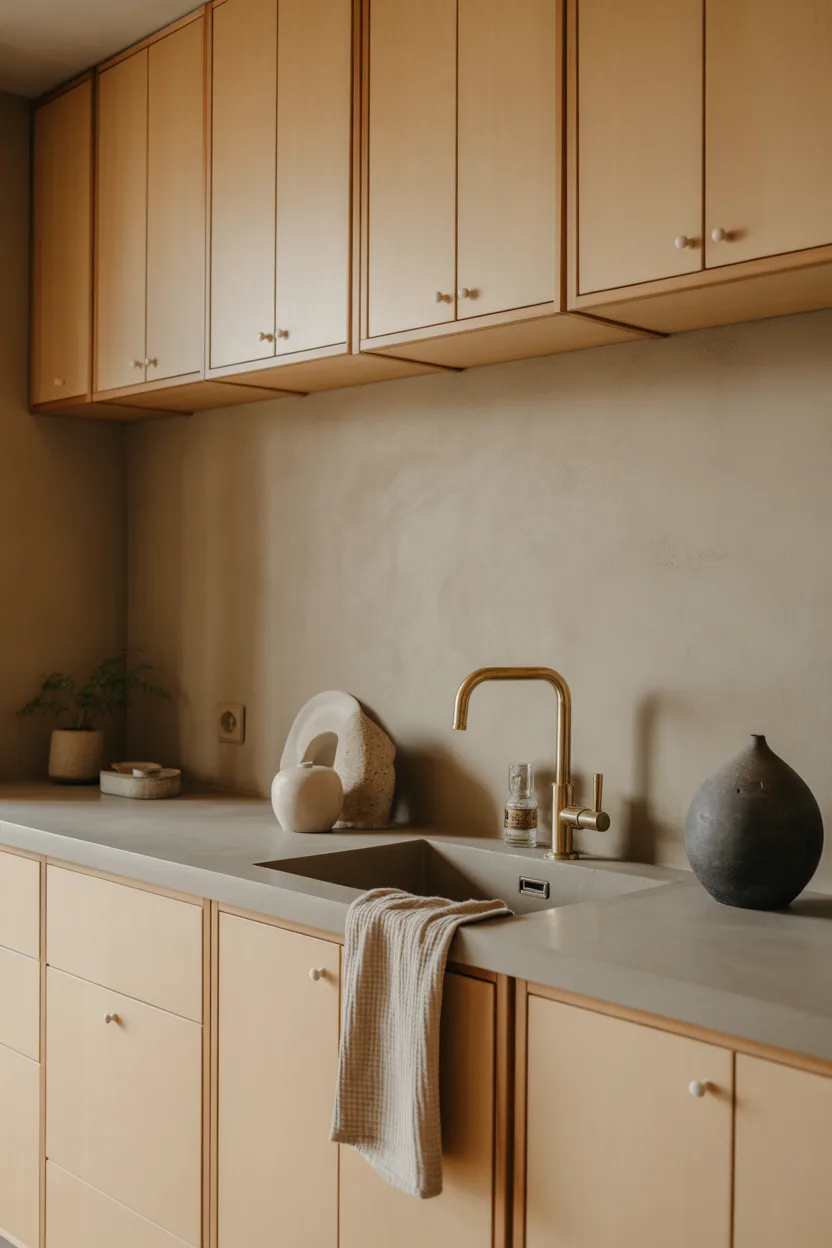
Natural wood cabinetry is one of the most important foundations of authentic Japandi Kitchen Design because it instantly creates warmth and softness within minimalist interiors.
Instead of glossy cabinets or overly decorative finishes, Japandi kitchens focus on clean wood grains and muted organic textures. Light oak, ash, walnut, and especially Birch Wood Kitchen cabinetry are becoming major trends in 2026 because they feel airy while still adding warmth.
Flat-panel cabinets work especially well in Japandi spaces because they maintain visual simplicity. Pairing warm wood with soft stone countertops and creamy plaster walls creates a kitchen that feels calm and balanced instead of overly modern.
The key is restraint. Japandi kitchens avoid unnecessary ornamentation and focus more on material quality and atmosphere. If you love warm minimalist interiors, thesejapandi living room finds can help you create a cohesive aesthetic throughout your home.
Key Design Tips
Choose natural wood finishes
Organic grain patterns create warmth and texture.
Keep cabinet styles minimal
Flat-panel doors suit Japandi interiors beautifully.
Use muted earthy tones
Soft palettes feel calmer and more timeless.
2. Create A Modern Japandi Kitchen With Soft Neutral Colors
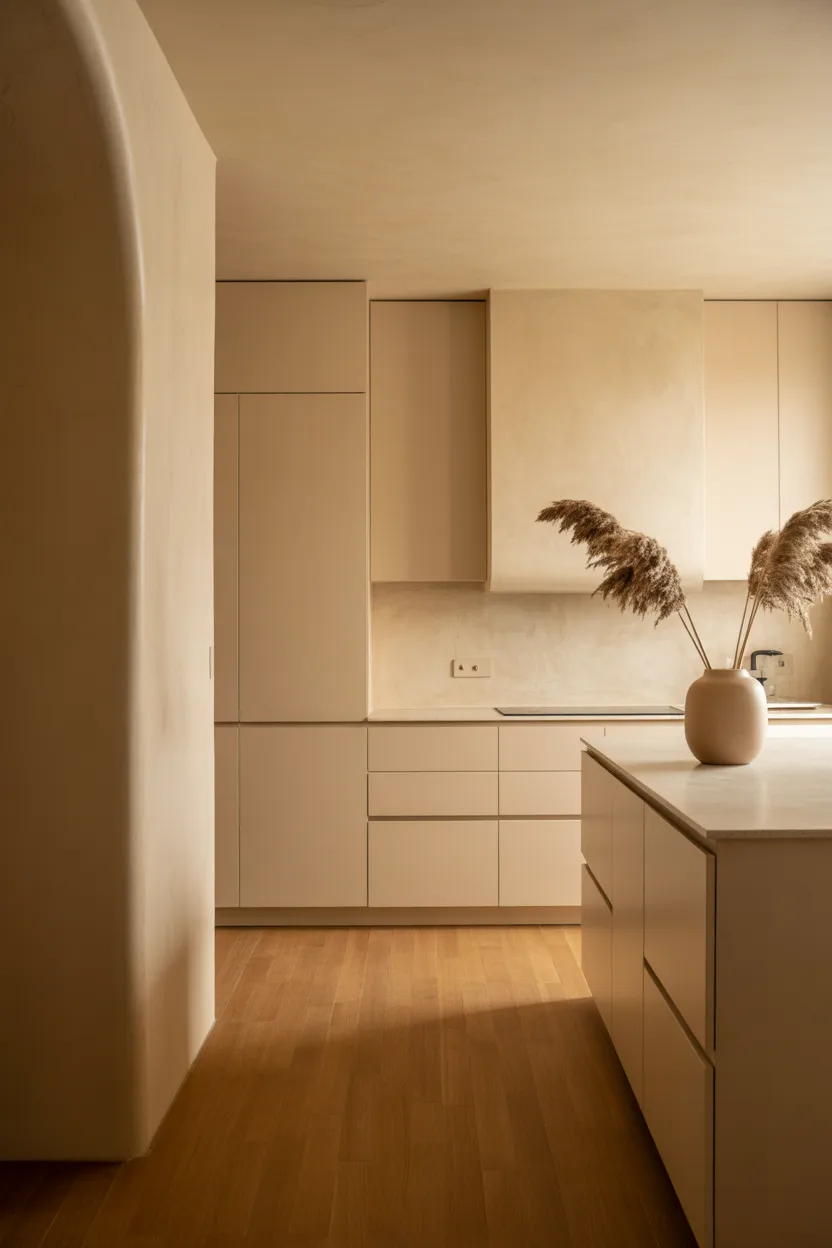
A Modern Japandi Kitchen should feel calm and grounded, which is why soft neutral palettes work so beautifully in this design style.
Warm whites, beige, taupe, clay, mushroom, and muted greys are especially popular in 2026 Japandi interiors because they create a relaxing atmosphere without feeling sterile. Unlike bright modern kitchens, Japandi spaces focus on softness and subtle contrast.
Layering different neutral tones helps create depth even within minimalist spaces. Stone backsplashes, textured walls, linen curtains, and matte finishes all contribute to a more organic aesthetic.
This approach also makes kitchens feel larger and brighter while maintaining warmth. If you enjoy calming earthy interiors, theseearthy minimalist bedroom ideas can inspire similar color palettes throughout the home.
Key Design Tips
Stick to warm neutral palettes
Soft colors create a calming atmosphere.
Layer textures instead of colors
Texture adds richness without visual clutter.
Avoid harsh contrasts
Japandi interiors should feel soft and balanced.
3. Add Open Shelving To A Scandinavian Japandi Kitchen
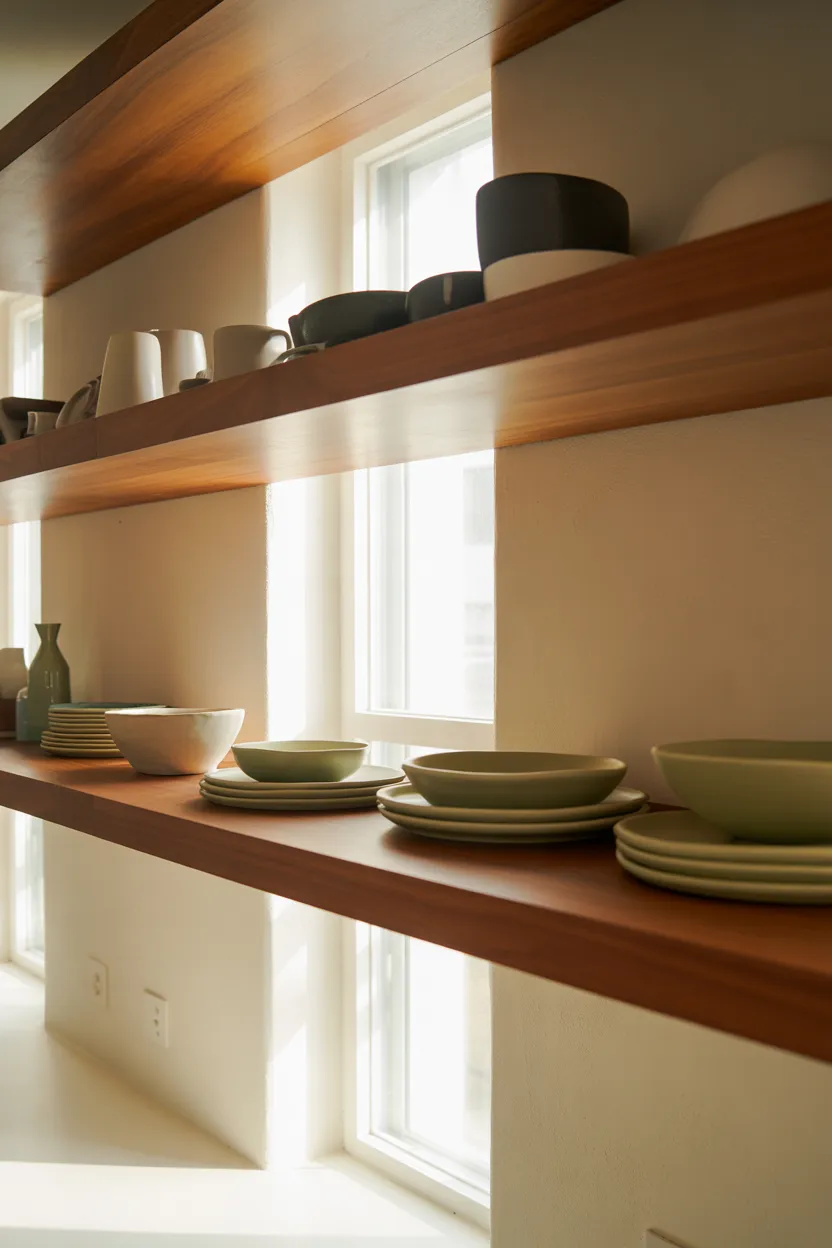
A Scandinavian Japandi Kitchen blends Nordic brightness with Japanese simplicity beautifully, and open shelving plays a huge role in achieving this balanced aesthetic.
Instead of bulky upper cabinets, floating wood shelves create a lighter more breathable atmosphere. This makes kitchens feel calmer and less visually crowded while giving you space to display intentional decor pieces.
Ceramic dishes, handmade bowls, glass jars, and neutral-toned kitchenware all work beautifully here. The secret is keeping shelves curated and uncluttered. Japandi interiors focus on thoughtful simplicity rather than excessive styling.
In 2026, many homeowners are also mixing Scandinavian white walls with darker walnut shelving for added contrast and warmth. If you love cozy Nordic interiors, thesecozy Scandinavian living room ideas offer more inspiration for blending warmth with minimalism.
Key Design Tips
Style shelves minimally
Too many objects disrupt Japandi calmness.
Use handmade ceramics
Organic imperfections add warmth and authenticity.
Match shelf wood tones carefully
Consistent wood finishes create visual harmony.
4. Try A Modern White Kitchen With Wood Accents
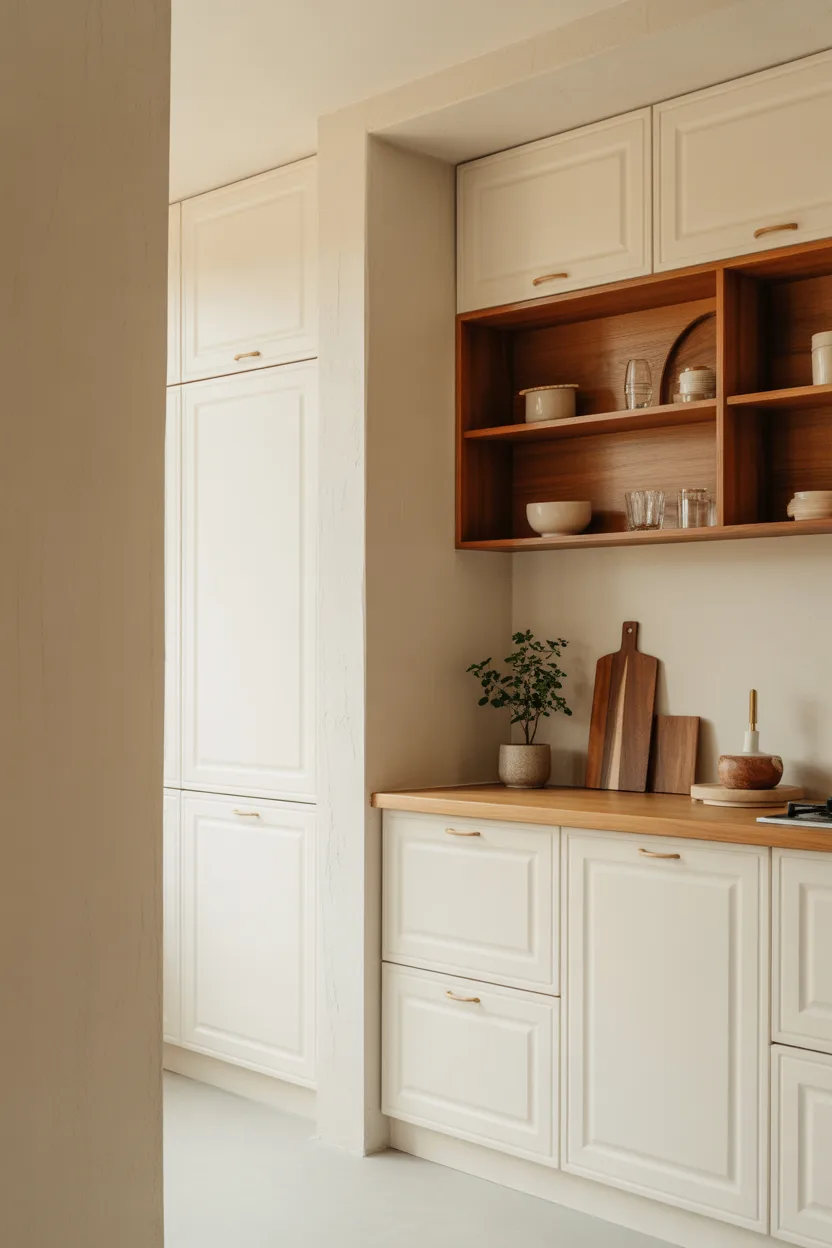
A Modern White Kitchen With Wood Accents is one of the easiest ways to achieve a clean Japandi aesthetic while keeping the space bright and timeless.
White cabinetry keeps kitchens feeling airy while warm wood details prevent the room from looking cold or clinical. In Japandi interiors, wood accents often appear through shelving, bar stools, islands, or ceiling beams rather than excessive decor.
In 2026, textured white plaster walls and creamy off-white cabinetry are replacing stark bright whites because they feel softer and more organic. Pairing these tones with oak or walnut instantly creates a calm luxury atmosphere.
This combination works beautifully in both large open kitchens and smaller apartments because it reflects light naturally while maintaining warmth.
Key Design Tips
Use creamy whites instead of stark tones
Warm whites feel softer and more inviting.
Add wood strategically
A few natural accents create enough warmth.
Keep countertops minimal
Clutter disrupts Japandi simplicity quickly.
5. Incorporate Wabi Sabi Kitchens With Organic Textures
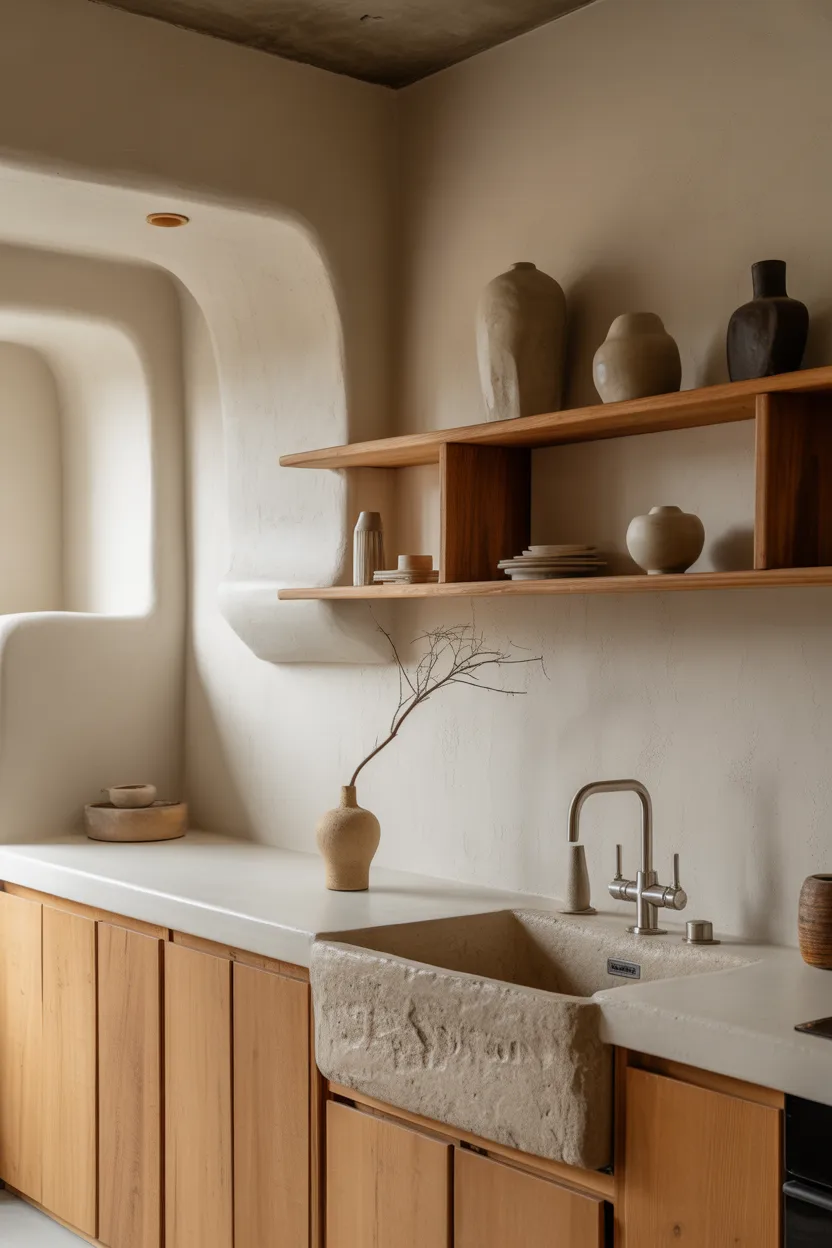
One of the most beautiful evolutions of Japandi design is the rise of Wabi Sabi Kitchens, which embrace natural imperfections and organic simplicity.
Wabi Sabi styling focuses on authenticity rather than perfection. Textured plaster walls, handmade pottery, raw wood finishes, stone sinks, and muted earthy colors all help create a softer more soulful kitchen atmosphere.
In 2026, homeowners are increasingly drawn toward interiors that feel lived-in and calming instead of showroom perfect. Small imperfections, visible textures, and handcrafted details make kitchens feel warmer and more human.
This design philosophy works beautifully alongside Japandi minimalism because both styles prioritize simplicity and intentional living. If you love organic calming interiors, thesewabi sabi bedroom ideas can inspire similar textures and materials throughout your home.
Key Design Tips
Embrace natural imperfections
Organic textures add warmth and authenticity.
Use earthy muted colors
Soft tones create a peaceful atmosphere.
Prioritize handcrafted decor
Handmade objects make kitchens feel more soulful.
6. Design A Japandi Style House Kitchen With Seamless Flow
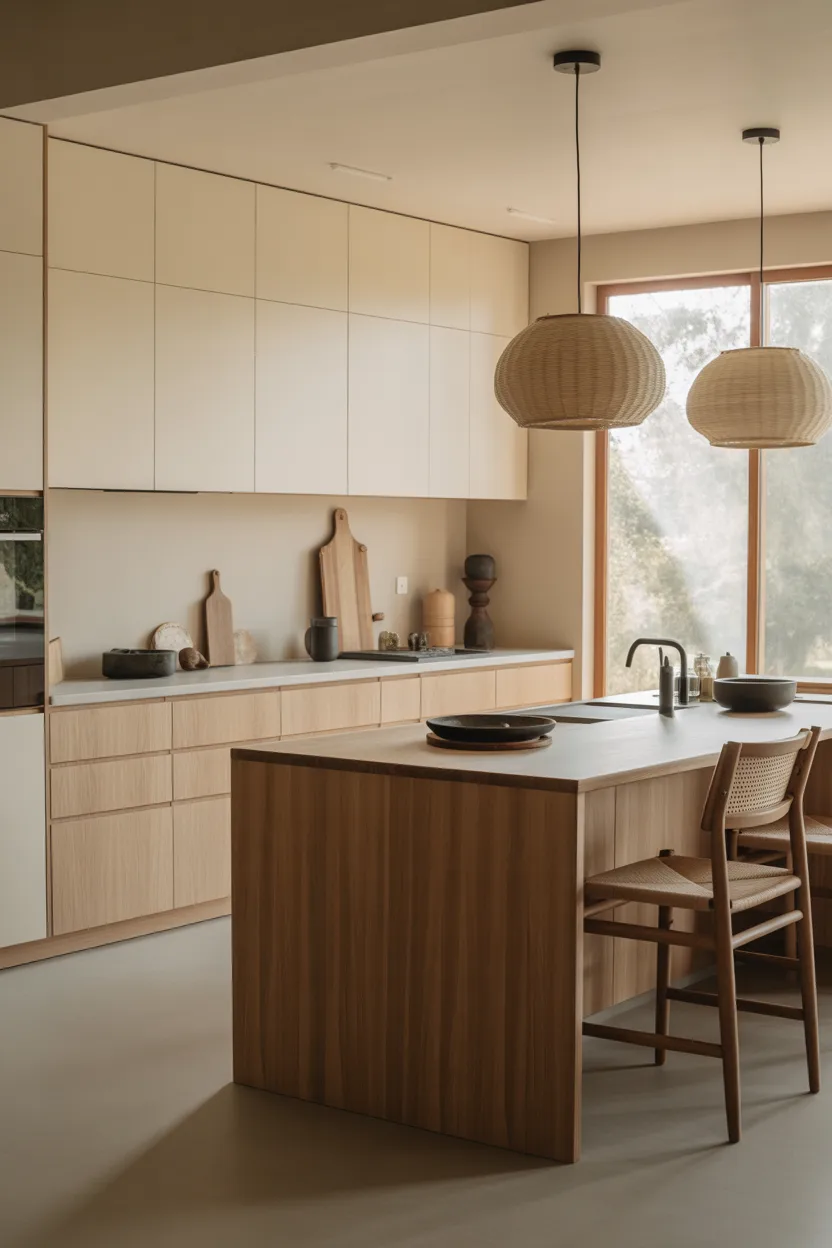
A kitchen inside a true Japandi Style House should feel connected to the rest of the home rather than visually separate.
Open layouts, consistent flooring, natural materials, and soft color palettes all help create flow between rooms. Japandi interiors focus heavily on harmony, so abrupt contrasts between spaces are usually avoided.
Many 2026 Japandi homes use light oak flooring throughout the entire space while repeating similar textures and tones in the kitchen, dining area, and living room. This creates a peaceful cohesive atmosphere.
Minimal decor and hidden storage systems also help maintain visual calm throughout open-concept homes.
7. Use Curved Islands In A Modern Kitchen Japandi Layout
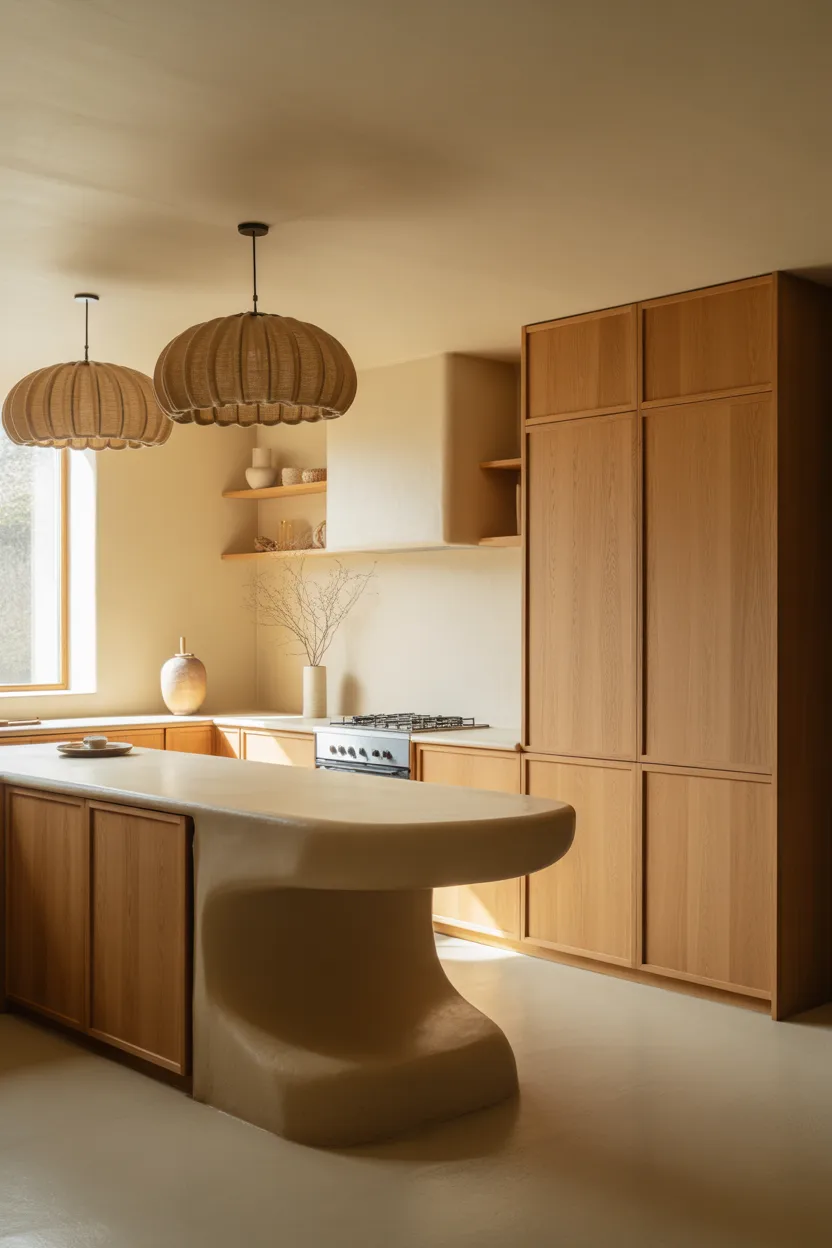
Soft curves are becoming one of the biggest trends in Modern Kitchen Japandi interiors because they help minimalist spaces feel warmer and more organic.
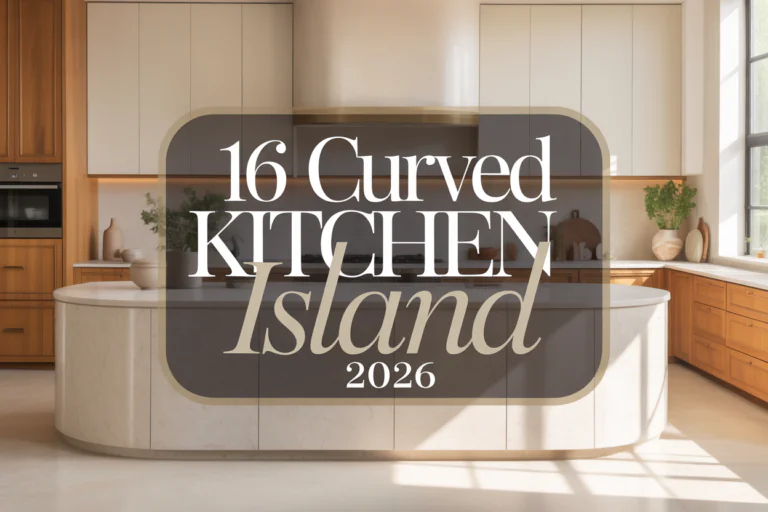
Instead of sharp harsh edges, curved islands create smoother movement flow while adding sculptural beauty to the kitchen. In 2026, designers are especially loving rounded waterfall islands paired with textured stone and warm wood finishes.
Curves also soften the clean lines often found in Japandi spaces, preventing kitchens from feeling too rigid or sterile. Combined with soft pendant lighting and earthy textures, the result feels calming and luxurious.
This design approach works especially well in open-concept homes where the kitchen island becomes the visual centerpiece. If you love organic architectural details, thesecurved kitchen island ideas offer more inspiration for sculptural layouts.
Key Design Tips
Add subtle rounded edges
Curves soften minimalist interiors beautifully.
Pair curves with natural materials
Stone and wood enhance organic warmth.
Keep island styling simple
Minimal decor maintains Japandi balance.
8. Layer Soft Lighting For Warm Kitchen Design Ideas
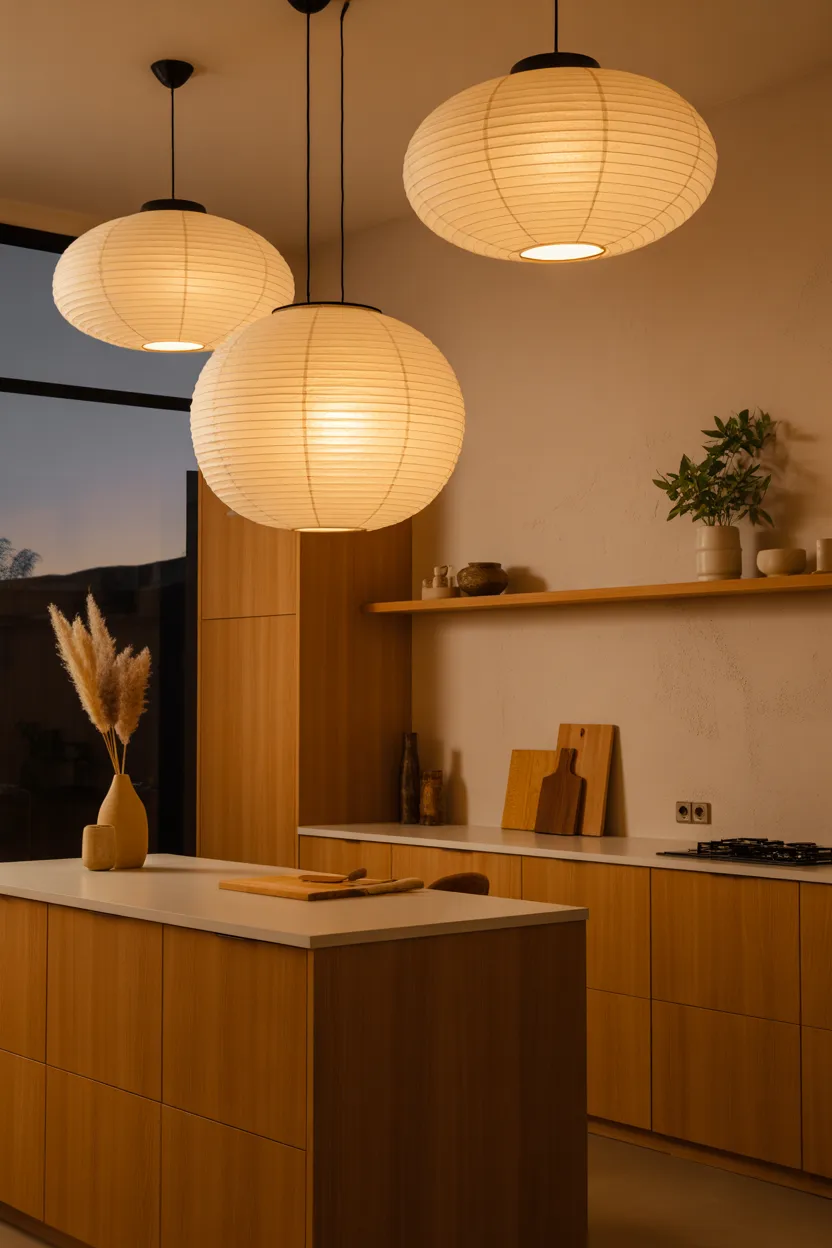
Lighting completely changes the atmosphere of a Japandi kitchen. The best Warm Kitchen Design Ideas always rely on layered lighting instead of harsh overhead fixtures.
Japandi interiors focus heavily on comfort and mood, so warm ambient lighting is essential. Paper lantern pendants, ribbed glass fixtures, wall sconces, under-cabinet lighting, and candles all help create a softer atmosphere.
In 2026, oversized sculptural lighting is especially popular in Japandi homes because it doubles as functional art while still maintaining minimalism. Warm-toned bulbs are important too because cool lighting can make neutral interiors feel cold and flat.
Soft lighting helps natural textures stand out beautifully while making the kitchen feel relaxing throughout the evening. If you love cozy atmospheric spaces, thesewarm inviting ideas can inspire additional cozy design details.
Key Design Tips
Use warm-toned lighting
Soft lighting enhances natural textures beautifully.
Layer multiple light sources
Ambient lighting creates a calmer atmosphere.
Choose sculptural fixtures
Simple statement lighting elevates minimalist spaces.
9. Create A Japandi Kitchen Moodboard With Earthy Colors
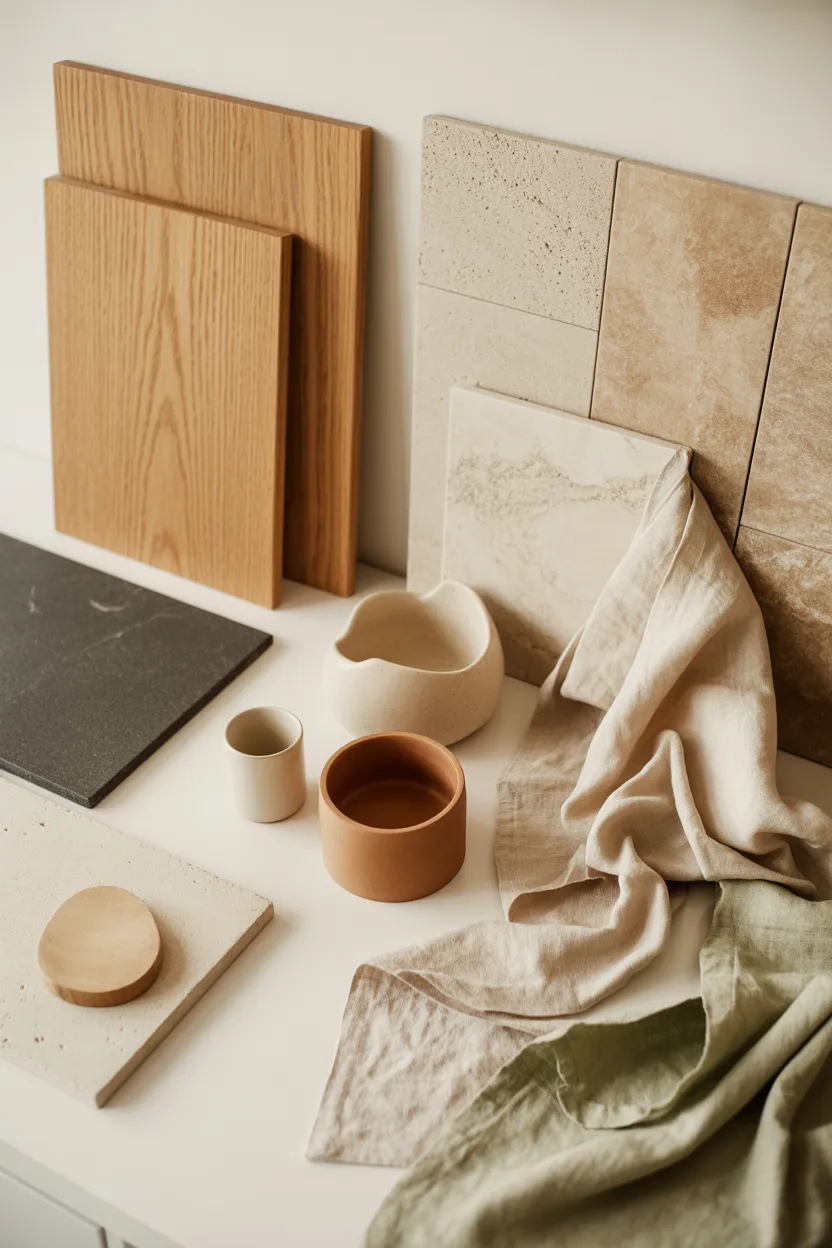
Building a Japandi Kitchen Moodboard before renovating can help create a more cohesive and intentional design.
Japandi palettes usually combine warm neutrals, soft wood tones, muted greens, earthy browns, charcoal accents, and creamy whites. Instead of dramatic color contrast, Japandi design relies on subtle tonal layering to create depth.
Natural materials should also play a major role in the moodboard. Wood samples, textured plaster, stone finishes, linen fabrics, handmade ceramics, and matte metal accents all help shape the final atmosphere.
In 2026, homeowners are moving toward more earthy organic kitchens instead of stark monochromatic spaces. This creates interiors that feel emotionally warmer and easier to live in long term. If you love earthy calming palettes, thesesage green living room ideas can inspire additional natural color combinations.
Key Design Tips
Focus on tonal harmony
Subtle layering feels calmer than high contrast.
Include natural materials early
Textures shape the overall atmosphere significantly.
Avoid trendy bold colors
Muted earthy tones age more gracefully.
10. Add Stone And Wood For Kitchen Ideas Natural
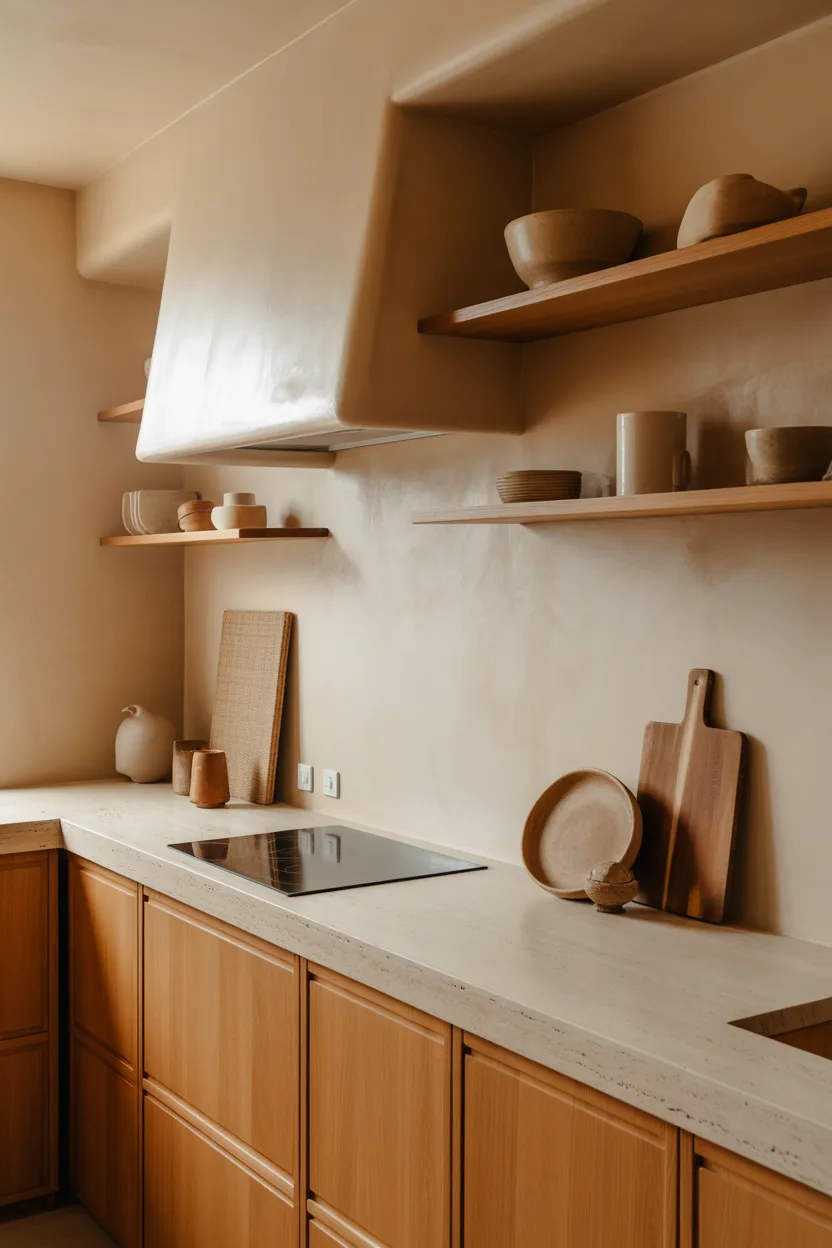
The best Kitchen Ideas Natural always combine organic materials in a balanced and intentional way.
Stone countertops paired with warm wood cabinetry create the perfect Japandi foundation because both materials feel timeless and calming. Travertine, limestone, soapstone, and lightly textured quartz are especially popular in 2026 Japandi interiors.
Natural materials also age beautifully over time, which aligns perfectly with Japanese design philosophy. Instead of chasing temporary trends, Japandi kitchens focus on creating spaces that feel peaceful for years.
The beauty comes from subtle imperfections and tactile textures rather than excessive decoration. If you enjoy earthy material palettes, thesecozy earthy living room ideas can inspire complementary organic styling.
Key Design Tips
Use authentic natural materials
Real textures create warmth and depth.
Stick to matte finishes
Soft surfaces feel calmer and more organic.
Avoid overdecorating
Materials themselves should become the focal point.
11. Try Low Contrast Colors In A Japandi Modern Kitchen
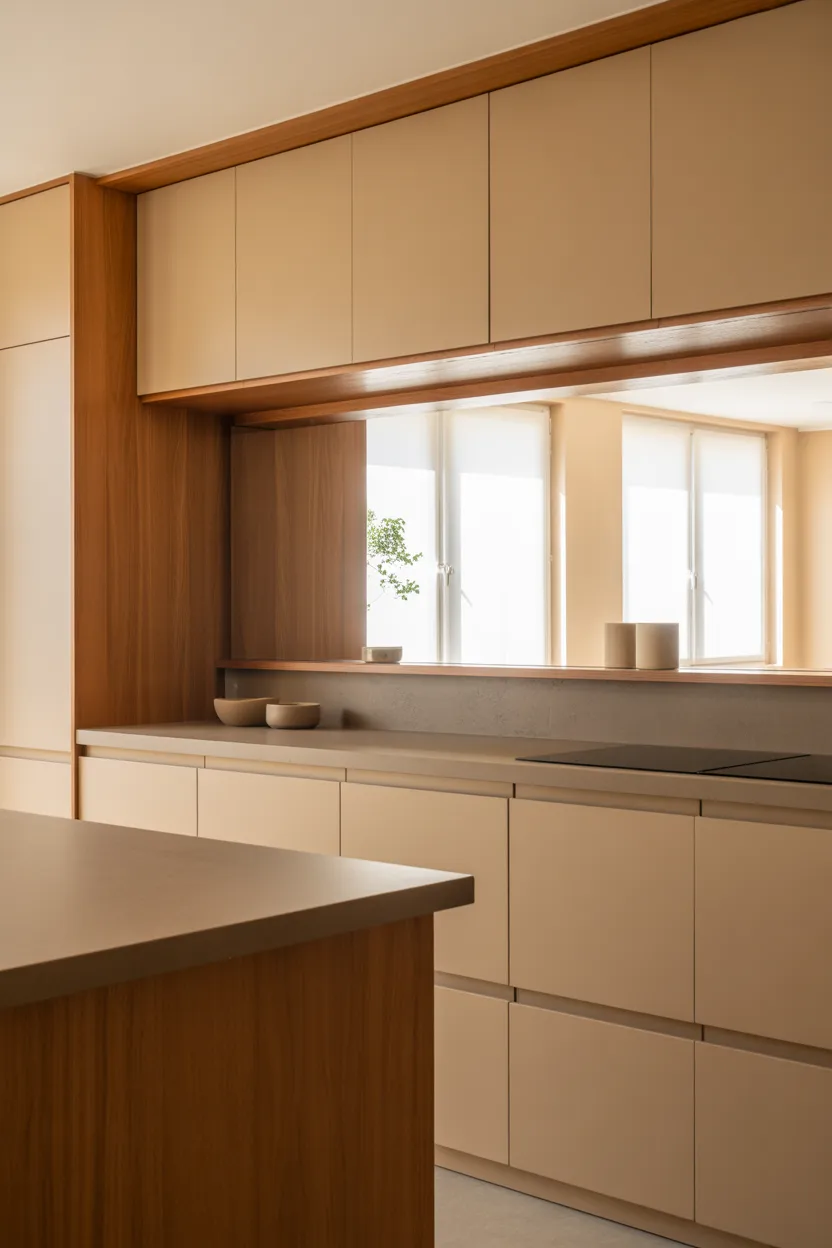
A Japandi Modern Kitchen feels most peaceful when colors blend softly together instead of competing for attention.
Low-contrast palettes help kitchens feel larger, calmer, and more cohesive. Beige walls paired with light oak cabinetry, warm stone surfaces, and soft taupe accents create subtle depth without overwhelming the room visually.
In 2026, homeowners are increasingly avoiding stark black-and-white kitchens and choosing softer tonal palettes instead. These warmer muted interiors feel far more relaxing and timeless.
This approach also allows textures and natural lighting to stand out more beautifully. If you love soft neutral interiors, thesebeige living room ideas can inspire more tonal layering ideas.
Key Design Tips
Use tonal layering carefully
Subtle contrast creates a calmer atmosphere.
Keep palettes warm
Earthy neutrals feel softer and more welcoming.
Let textures add depth
Texture matters more than bold color in Japandi design.
12. Design A Minimal Coffee Corner In Japandi Kitchen Style
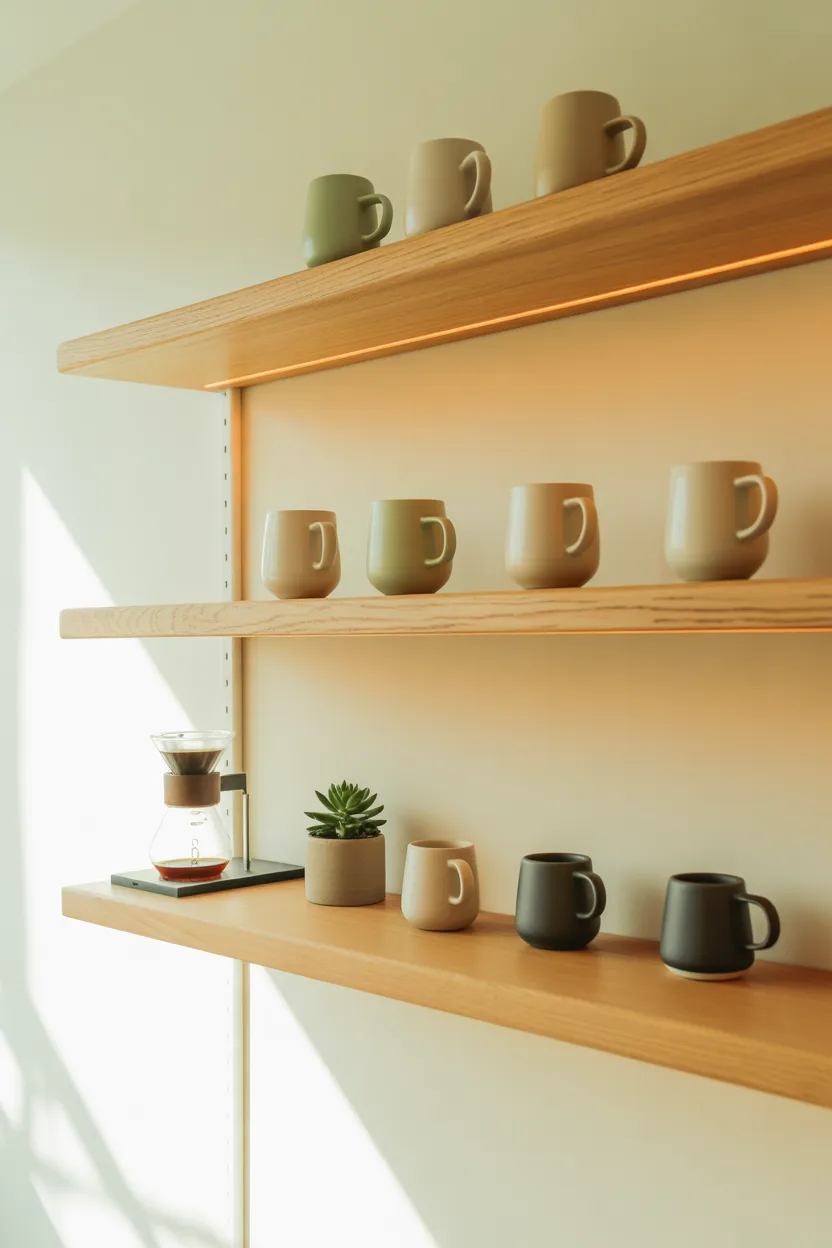
A simple coffee station can become one of the coziest features in a Japandi Kitchen Style space.
Japandi coffee corners focus on functionality, warmth, and intentional styling. Floating wood shelves, ceramic mugs, handmade trays, warm lighting, and matte coffee machines all work beautifully together.
The key is keeping the setup uncluttered. Instead of filling counters with accessories, Japandi design prioritizes only the essentials while making them visually beautiful.
In 2026, many homeowners are styling coffee corners with soft under-shelf lighting and natural materials to create calm morning routines. If you enjoy cozy beverage spaces, thesecoffee bar ideas at home offer additional inspiration.
Key Design Tips
Keep counters visually clean
Minimal setups feel calmer and more relaxing.
Use handmade accessories
Ceramics and wood add warmth naturally.
Add subtle warm lighting
Soft lighting enhances cozy coffee corners beautifully.
13. Blend Scandinavian And Japanese Dining Spaces
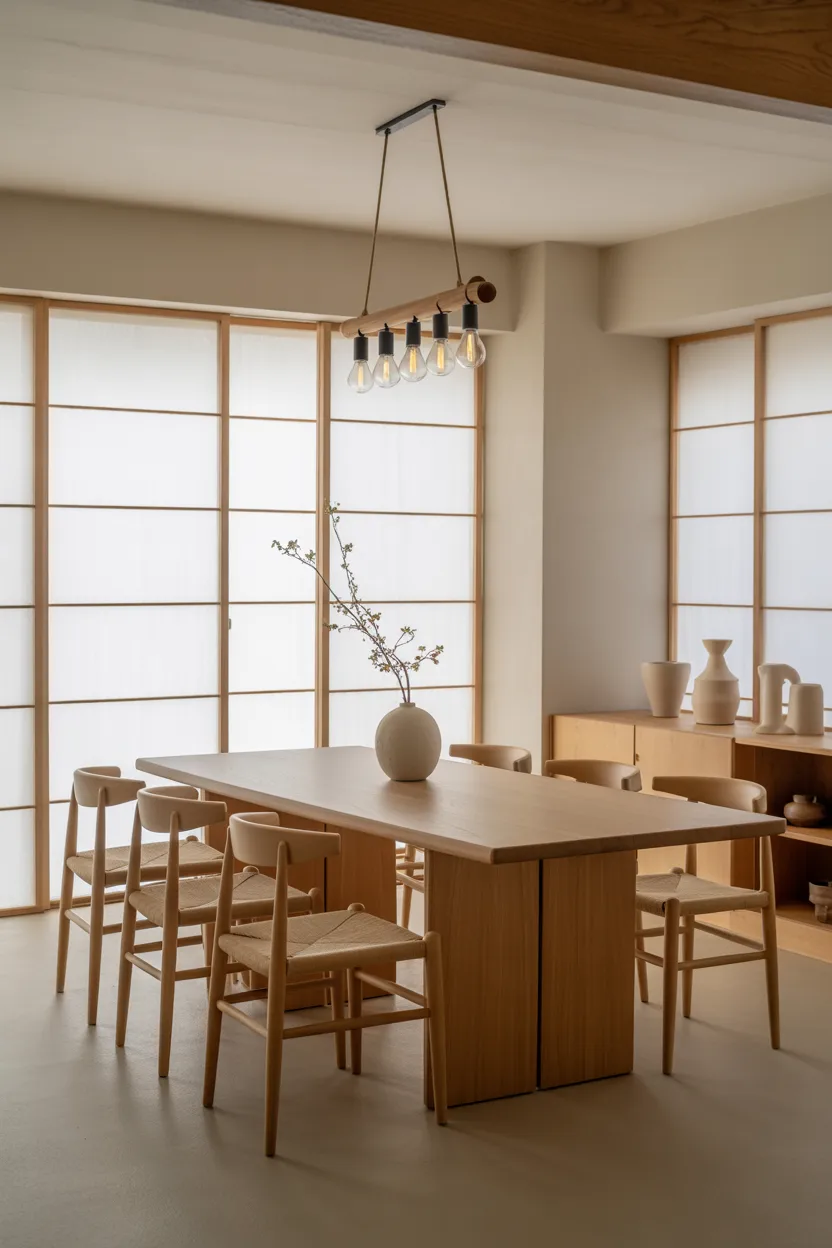
One of the most beautiful aspects of Kitchen Design Japandi is how naturally it connects kitchens and dining areas together.
Japandi dining spaces usually feature light wood tables, sculptural chairs, linen textiles, soft pendant lighting, and minimal centerpieces. Everything feels intentional without becoming overly styled.
Open-concept layouts especially benefit from this seamless design approach because consistent materials and muted colors create visual harmony throughout the home. In 2026, integrated dining spaces are becoming more relaxed and cozy rather than formal.
Warm oak dining tables paired with textured ceramics and soft lighting create a timeless atmosphere perfect for everyday living.
14. Add Hidden Storage To A Japandi Kitchen Design
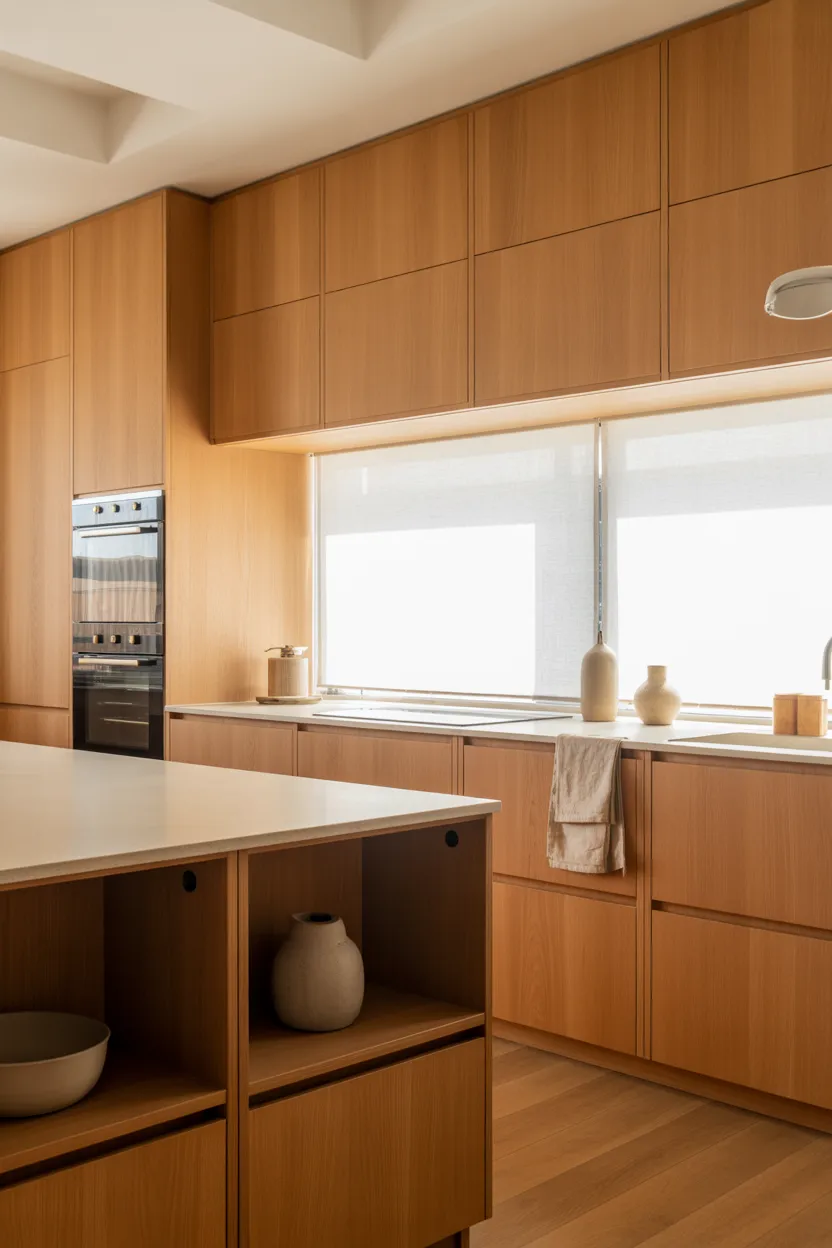
A clutter-free environment is essential in any authentic Japandi Kitchen Design because the entire philosophy revolves around calm, intentional living.
Hidden storage helps maintain clean visual lines while keeping everyday essentials accessible. Integrated appliances, handleless cabinetry, pull-out pantry systems, and concealed storage compartments all help kitchens feel more peaceful and organized.
In 2026, many homeowners are designing kitchens with almost invisible storage solutions to preserve the minimalist atmosphere. Open countertops and simplified layouts instantly make spaces feel larger, brighter, and more relaxing.
This approach works especially well in smaller homes where visual clutter can quickly overwhelm the room. If you enjoy highly functional minimal interiors, thesesmall home office ideas can inspire additional smart organization ideas.
Key Design Tips
Prioritize hidden storage systems
Clean visual lines create a calmer atmosphere.
Reduce countertop clutter
Minimal surfaces feel more peaceful and functional.
Use integrated appliances
Built-in designs improve visual flow beautifully.
15. Use Black Accents Carefully In Modern Japandi Kitchen Spaces
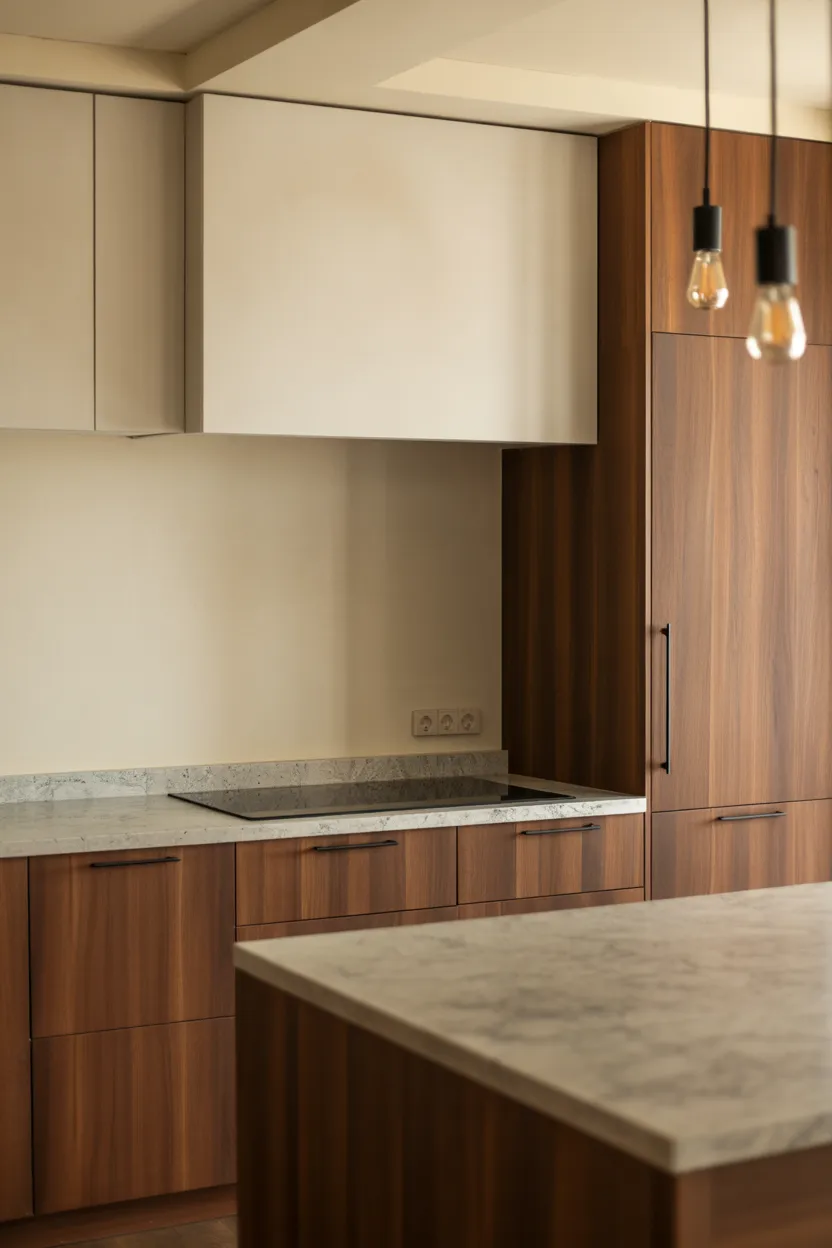
Black accents can add beautiful contrast to a Modern Japandi Kitchen, but the key is using them carefully and intentionally.
Matte black faucets, pendant lights, cabinet pulls, or dining chairs can help ground soft neutral interiors without overpowering the calm atmosphere. Japandi design still prioritizes warmth and softness, so black should remain subtle rather than dominant.
In 2026, designers are especially pairing black accents with walnut wood, creamy plaster walls, and textured stone surfaces for a balanced organic modern look. This creates enough contrast to feel contemporary while maintaining serenity.
Too much black can make Japandi interiors feel cold or industrial, which goes against the calming philosophy of the style. If you enjoy darker modern interiors balanced with warmth, thesemoody farmhouse kitchen ideas can inspire additional contrast-rich styling.
Key Design Tips
Use black accents sparingly
Subtle contrast feels more elegant and calming.
Pair black with warm wood
Wood softens darker elements beautifully.
Stick to matte finishes
Matte black feels softer than glossy surfaces.
16. Create A Timeless Japandi Kitchen Style With Natural Simplicity
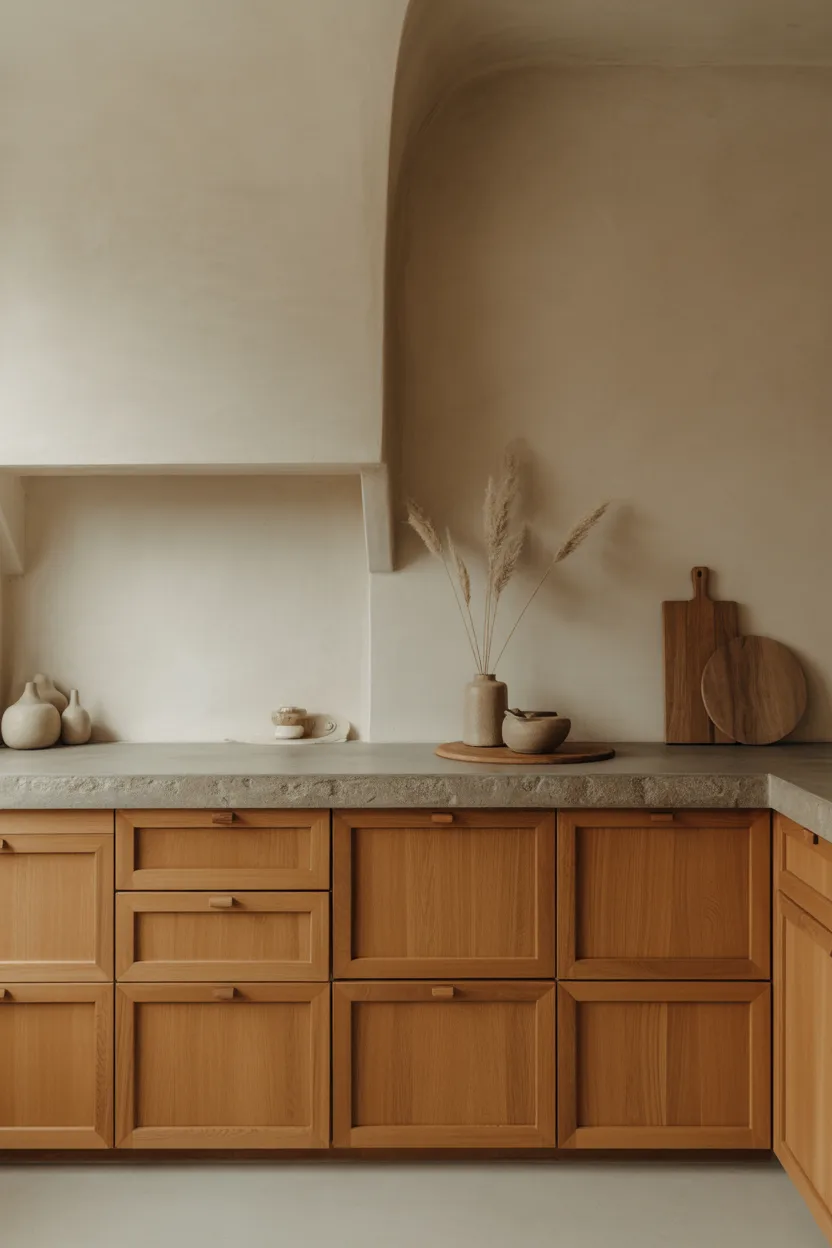
The most beautiful Japandi Kitchen Ideas all share one thing in common: simplicity that feels warm, intentional, and deeply livable.
Instead of chasing fast-moving trends, Japandi kitchens focus on timeless materials, calming layouts, natural textures, and practical functionality. Warm woods, stone surfaces, muted palettes, soft lighting, and handcrafted details all contribute to a kitchen that feels peaceful every single day.
In 2026, homeowners are embracing slower, softer interiors because they create emotional comfort and long-term visual calm. Japandi kitchens are not about perfection. They are about balance, mindfulness, and creating spaces that genuinely support everyday life.
Whether your style leans modern, Scandinavian, rustic, or Wabi Sabi, Japandi design offers a timeless foundation that can evolve beautifully over time. If you love cozy minimalist interiors, thesescandinavian bedroom ideas can inspire more natural calming spaces throughout your home.
Key Design Tips
Focus on timeless materials
Natural wood and stone always age beautifully.
Keep decor intentional
Every object should feel purposeful and calming.
Prioritize atmosphere over trends
Peaceful spaces remain timeless much longer.
FAQs
What is a Japandi kitchen?
A Japandi kitchen combines Japanese minimalism with Scandinavian warmth. It focuses on clean lines, natural materials, muted colors, and calm functional layouts.
What colors work best in Japandi kitchens?
Warm whites, beige, taupe, clay, muted greens, walnut browns, and soft earthy neutrals work beautifully in Japandi interiors.
What materials are commonly used in Japandi kitchen design?
Natural wood, stone, linen, plaster, ceramic, matte metal finishes, and handmade decor pieces are all common in Japandi kitchens.
Is Japandi style still popular in 2026?
Yes. Japandi remains one of the biggest interior trends because it creates peaceful timeless spaces that balance minimalism with warmth and comfort.
How do I make my kitchen look more Japandi?
Use warm wood tones, soft neutral palettes, minimal decor, natural textures, layered lighting, and hidden storage to create a calm clutter-free atmosphere.
Conclusion
A thoughtfully designed Japandi kitchen feels more than just beautiful. It feels peaceful, grounded, and deeply comforting to live in every day. That is why Japandi Kitchen Ideas continue becoming one of the most loved interior trends in 2026.
By combining Scandinavian warmth with Japanese simplicity, Japandi kitchens create the perfect balance between minimalism and coziness. Natural materials, soft lighting, earthy colors, and intentional design choices all help transform kitchens into calming spaces that support slower, more mindful living.
The best part about Japandi design is its timelessness. These kitchens are not built around temporary trends. They are designed around comfort, functionality, and emotional warmth. Once you focus on natural textures and thoughtful simplicity, your kitchen becomes a space that feels effortlessly beautiful for years to come.