16 Minimalist Japandi Bedroom Designs 2026 That Feel Calm Warm and Beautiful
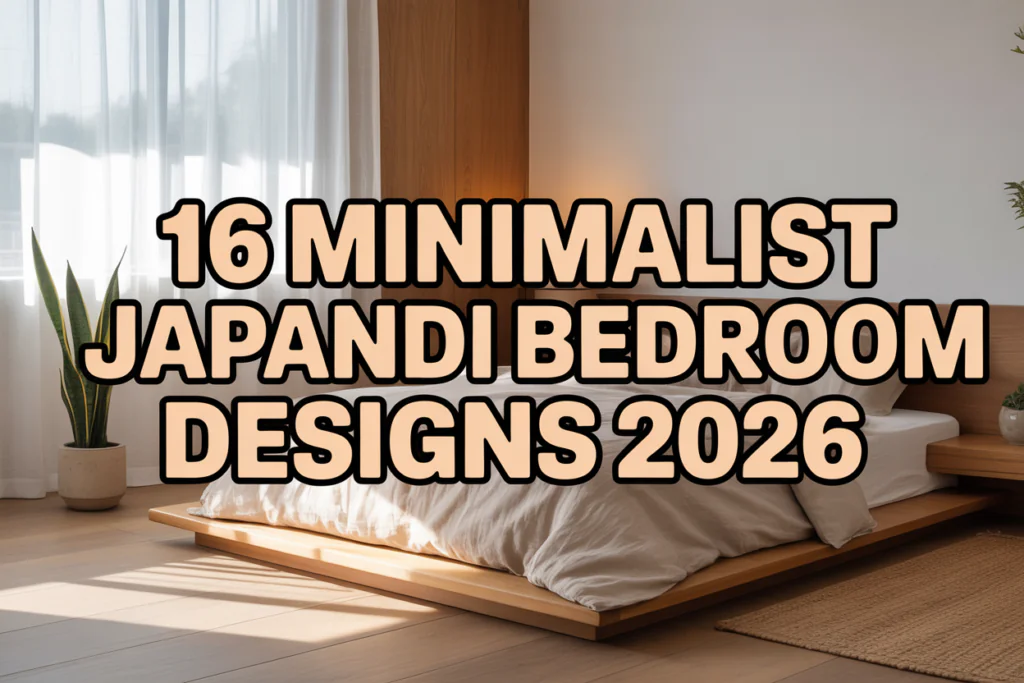
You want your bedroom to feel calm. Clean. Peaceful.
But somehow, it either ends up too empty… or quietly cluttered.
I’ve been there. The problem isn’t minimalism—it’s how you use it.
That’s where minimalist Japandi bedroom design stands out. It blends Japanese simplicity with Scandinavian warmth, creating a space that feels balanced, not boring.
In this guide, I’ll walk you through Japandi bedroom inspiration that actually works in real homes—simple, practical, and beautiful.
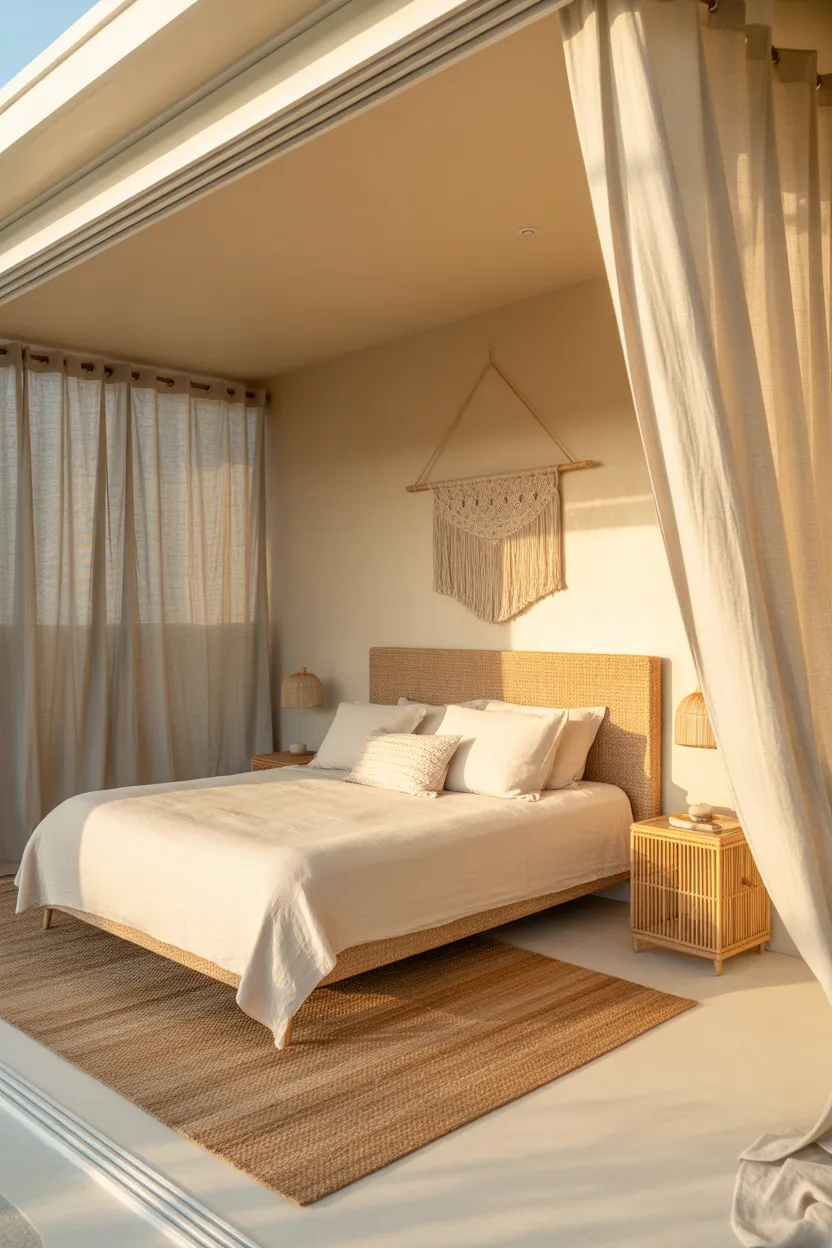
1. Minimalist Japandi Bedroom Design with a Low Platform Bed
Key Design Tips:
- Use a low platform bed for grounded aesthetics
- Keep bedding neutral (beige, white, soft gray)
- Avoid bulky bed frames
Explanation:
A low bed instantly creates that signature japanese minimalist bedroom look. It visually opens the space and brings a sense of calm.
Use Case:
Perfect for small rooms or anyone wanting a Zen-like feel.
Mistakes to Avoid:
- Tall beds that break the flow
- Over-layered bedding
For more layout ideas, exploresmall bedroom ideas
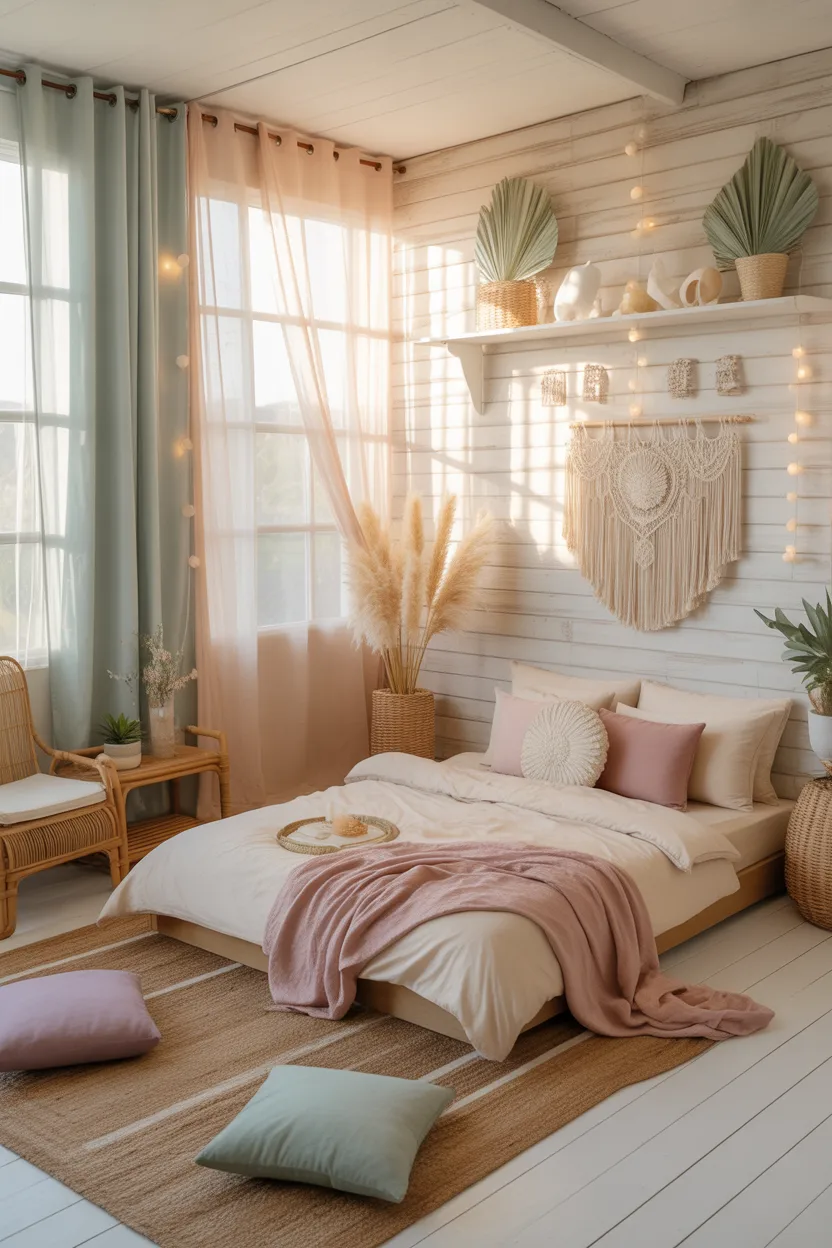
2. Modern Japandi Bedroom Design with Neutral Wooden Textures
Key Design Tips:
- Use oak, pine, or light wood finishes
- Pair with soft neutral fabrics
- Keep furniture minimal
Explanation:
A neutral wooden bedroom adds warmth to minimal spaces. This balance defines a modern Japandi bedroom design.
Use Case:
Great for creating a cozy yet clean look.
Mistakes to Avoid:
- Dark wood tones
- Mixing too many finishes
You can also explore brown bedroom ideas
3. Japandi Bedroom Inspiration with Soft Layered Bedding
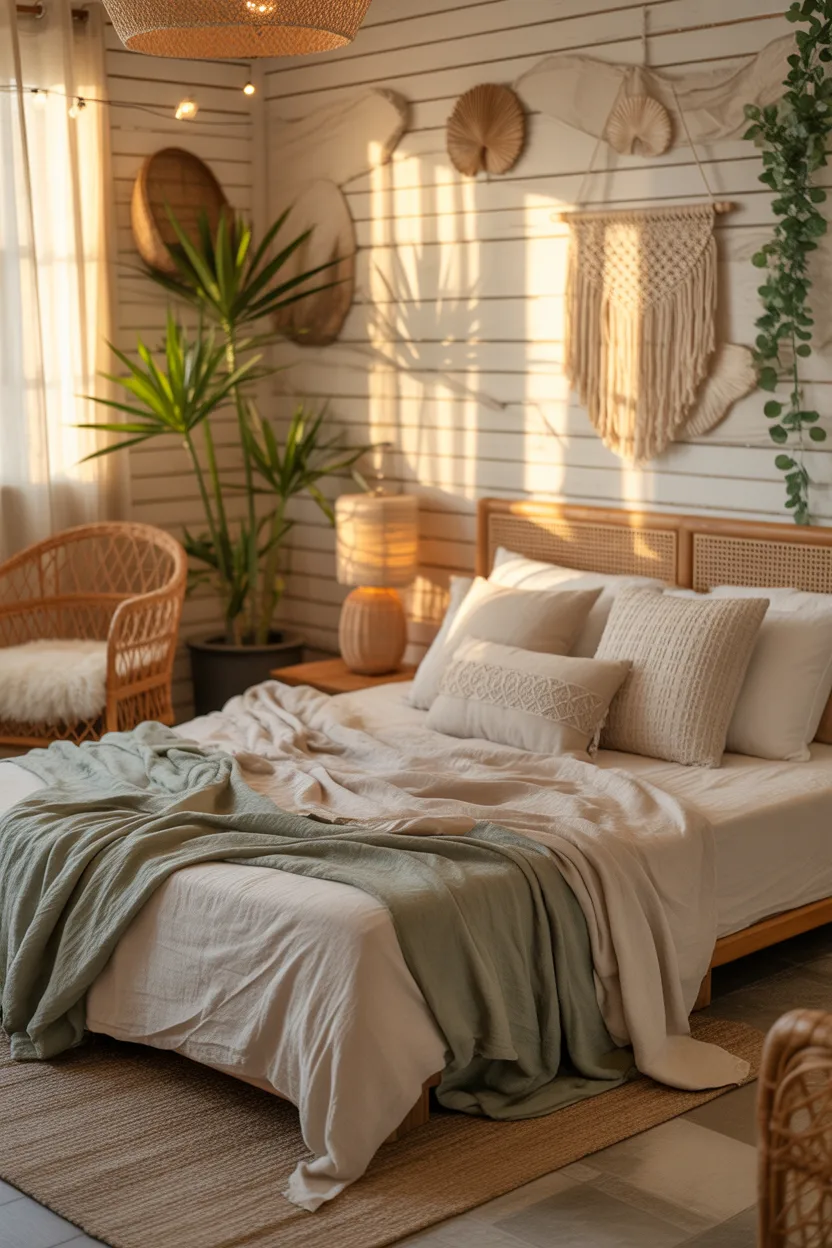
Key Design Tips:
- Layer linen and cotton textures
- Stick to muted tones
- Add 2–3 pillows max
Explanation:
Layering adds comfort without clutter. This is key in a cozy minimalist bedroom.
Use Case:
Perfect for making minimalism feel inviting.
Mistakes to Avoid:
- Overdecorating the bed
- Bright colors
Check cozy dark boho bedroom ideas
4. Japandi Bedroom Furniture with Clean Lines
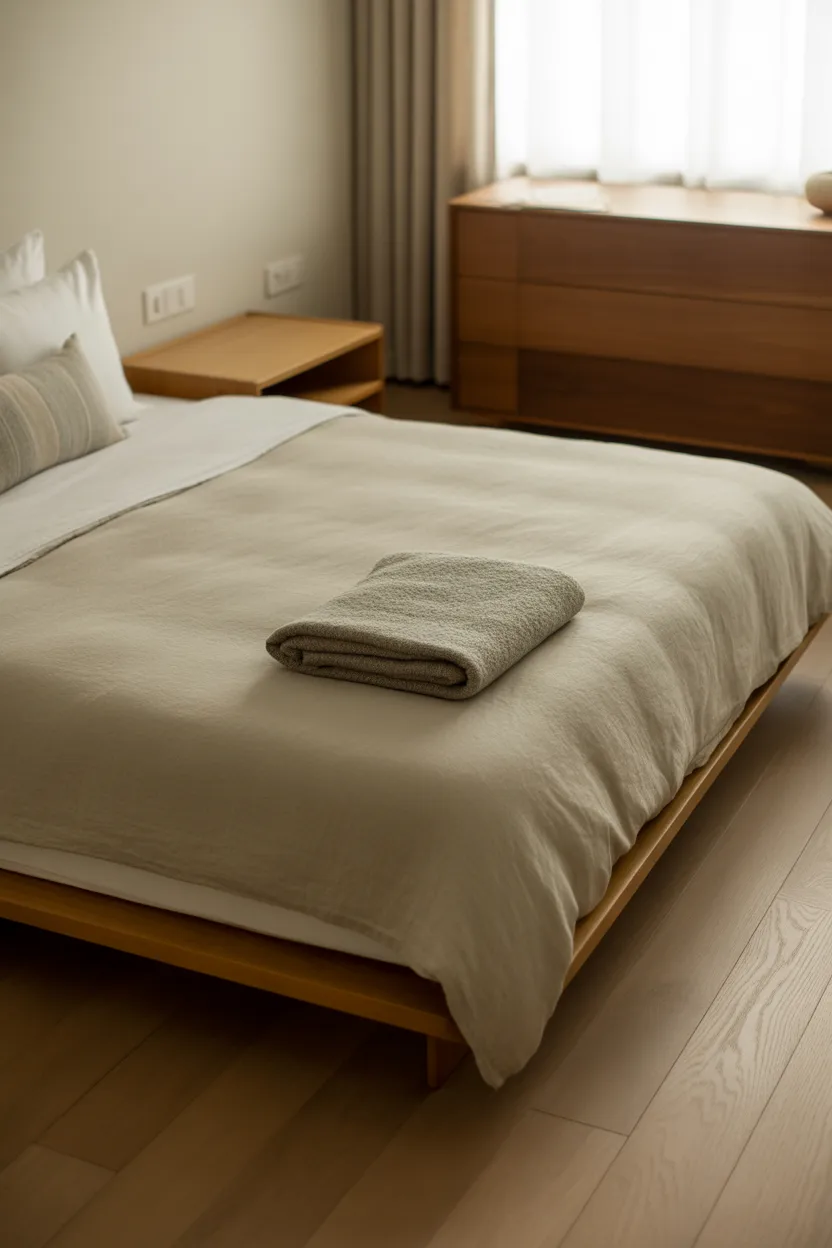
Key Design Tips:
- Choose simple, functional furniture
- Avoid ornate designs
- Focus on quality over quantity
Explanation:
Japandi bedroom furniture focuses on function first. Every piece should serve a purpose.
Use Case:
Ideal for clutter-free living.
Mistakes to Avoid:
- Decorative-heavy furniture
- Unnecessary items
Explore bedroom headboard ideas
5. Minimalist Bedroom Scandinavian Meets Japanese Style
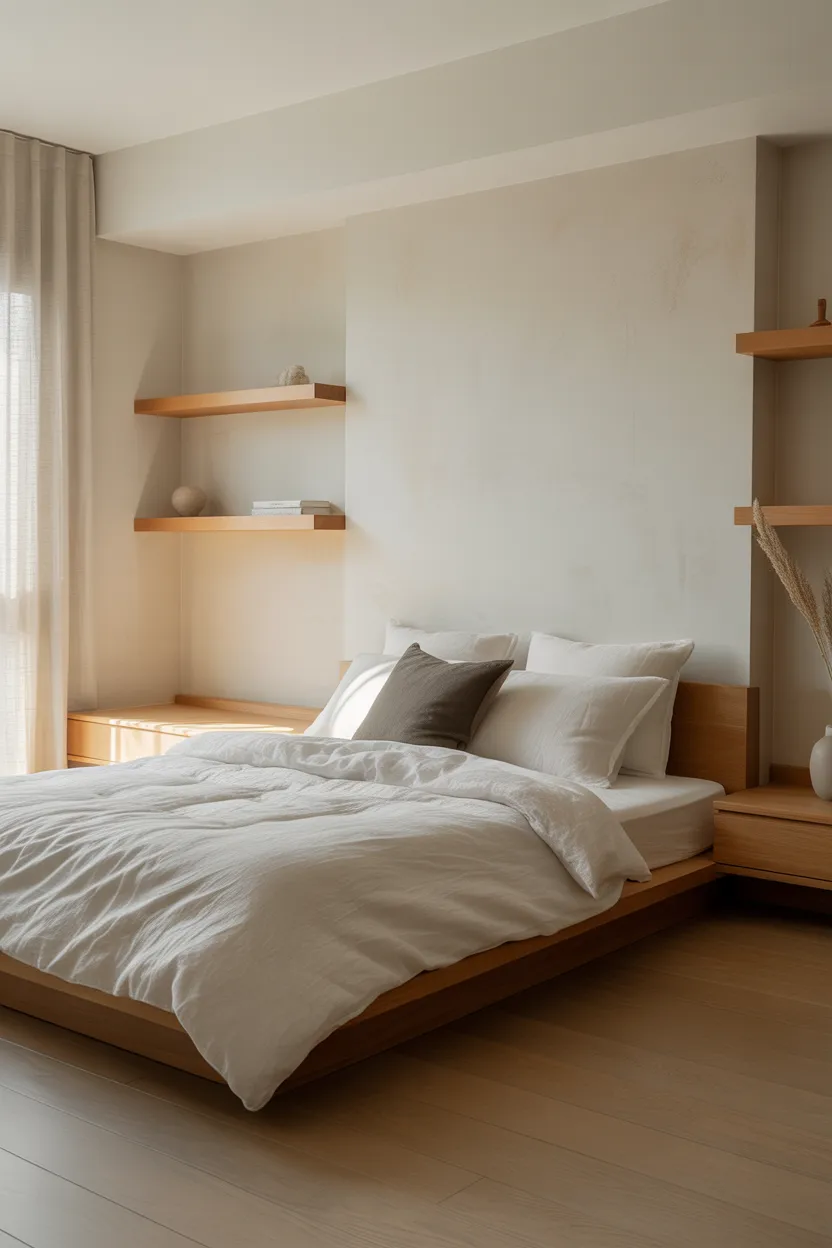
Key Design Tips:
- Blend Scandinavian whites with Japanese neutrals
- Add subtle texture
- Keep decor minimal
Explanation:
This fusion creates a minimalist bedroom scandinavian aesthetic that feels both warm and structured.
Use Case:
Great for modern homes.
Mistakes to Avoid:
- Too much white (feels cold)
You can explore scandinavian bedroom ideas
6. Japandi Style Room with Natural Light Focus
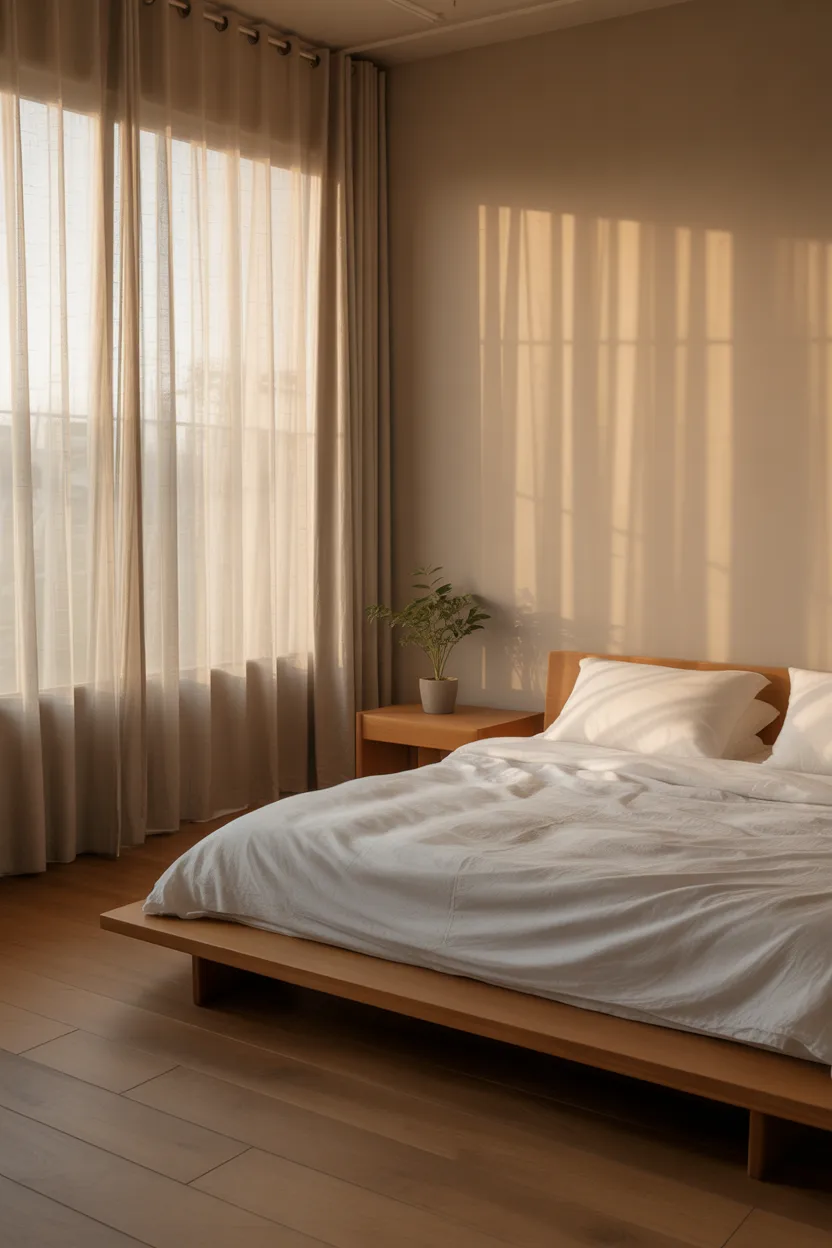
Key Design Tips:
- Use sheer curtains
- Keep windows open
- Avoid blocking light
Explanation:
Light defines a japandi style room. It enhances calmness and simplicity.
Use Case:
Best for bright, airy rooms.
Mistakes to Avoid:
- Heavy curtains
- Dark layouts
7. Minimalist Zen Bedroom with Earthy Elements
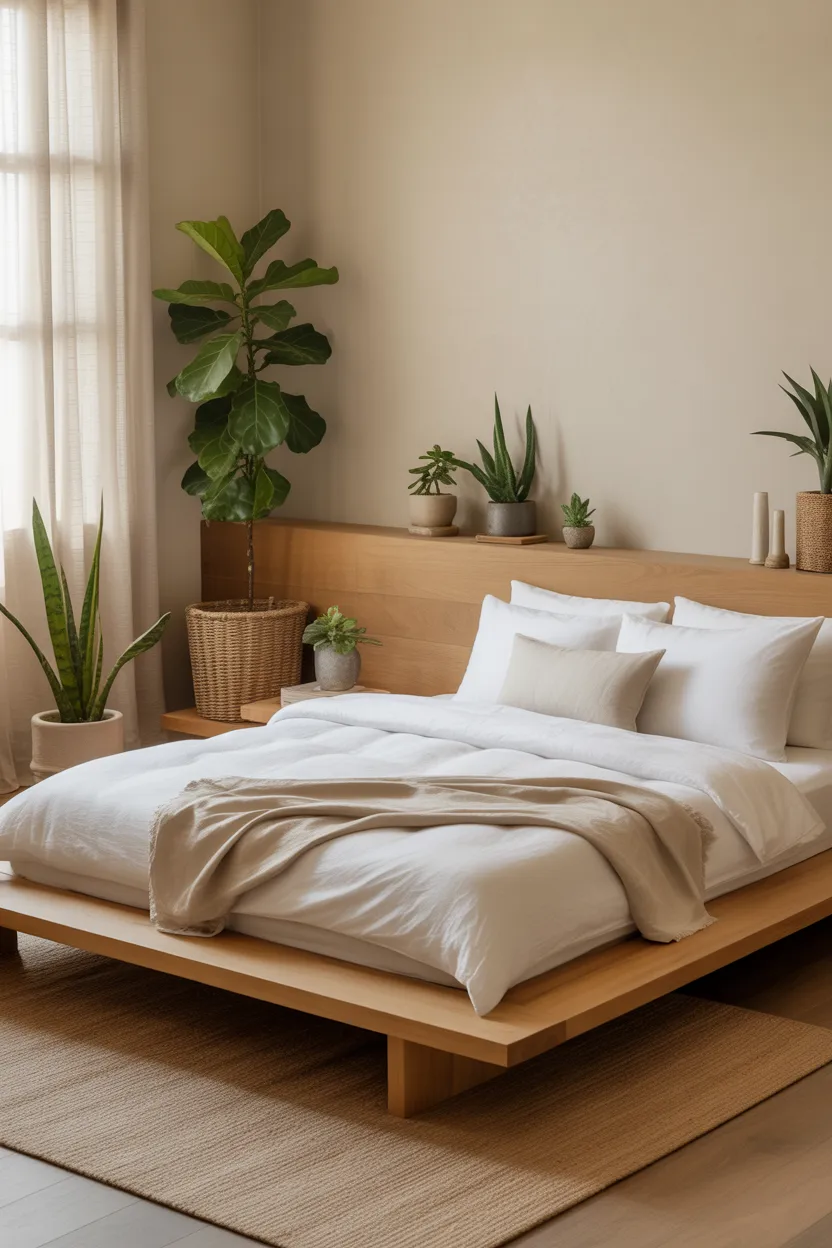
Key Design Tips:
- Add plants or stone decor
- Use earthy tones
- Keep layout simple
Explanation:
A minimalist zen bedroom connects you with nature.
Use Case:
Perfect for relaxation and mindfulness.
Mistakes to Avoid:
- Too many decorative items
Explore earthy minimalist bedroom ideas
8. Muji Style Room for Pure Simplicity
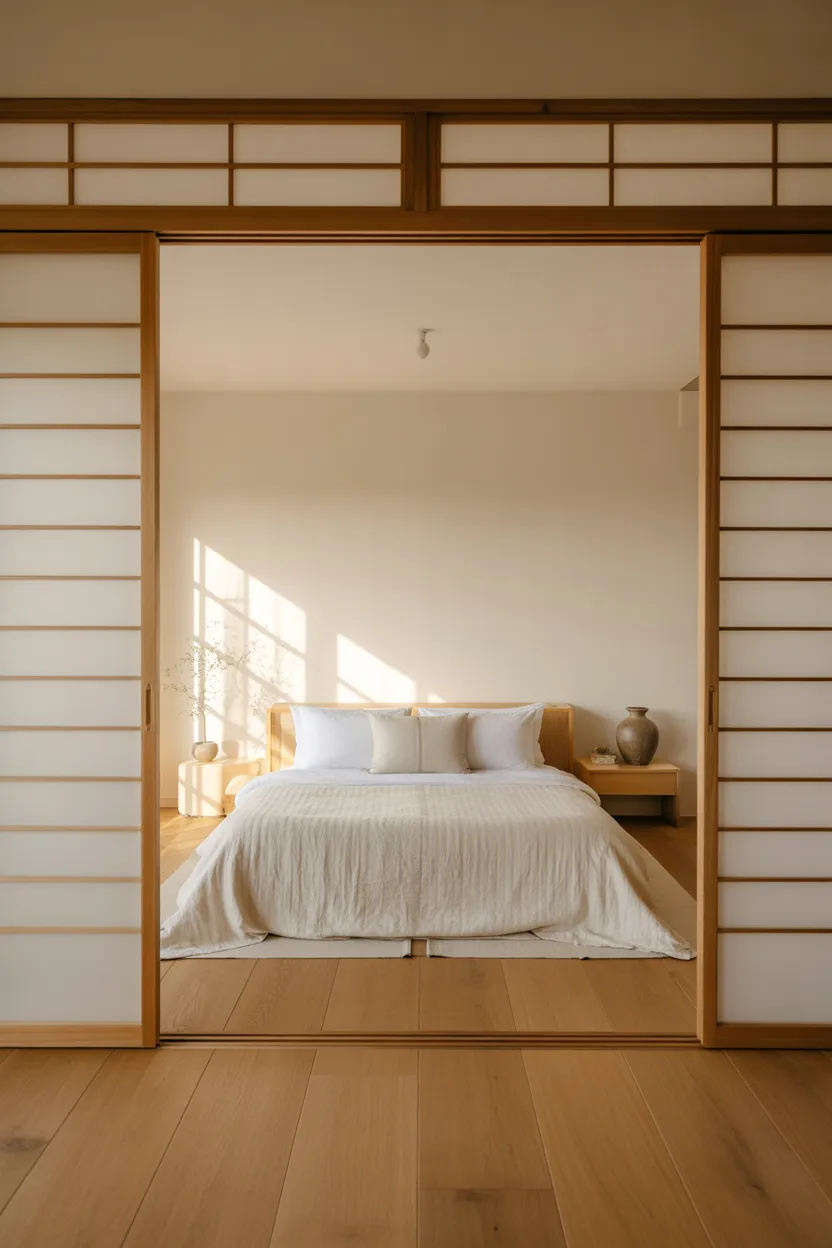
Key Design Tips:
- Use functional storage
- Keep everything minimal
- Focus on practicality
Explanation:
A muji style room is the purest form of minimalism.
Use Case:
Best for clutter-free living.
Mistakes to Avoid:
- Adding unnecessary decor
9. Cozy Minimalist Bedroom with Warm Lighting
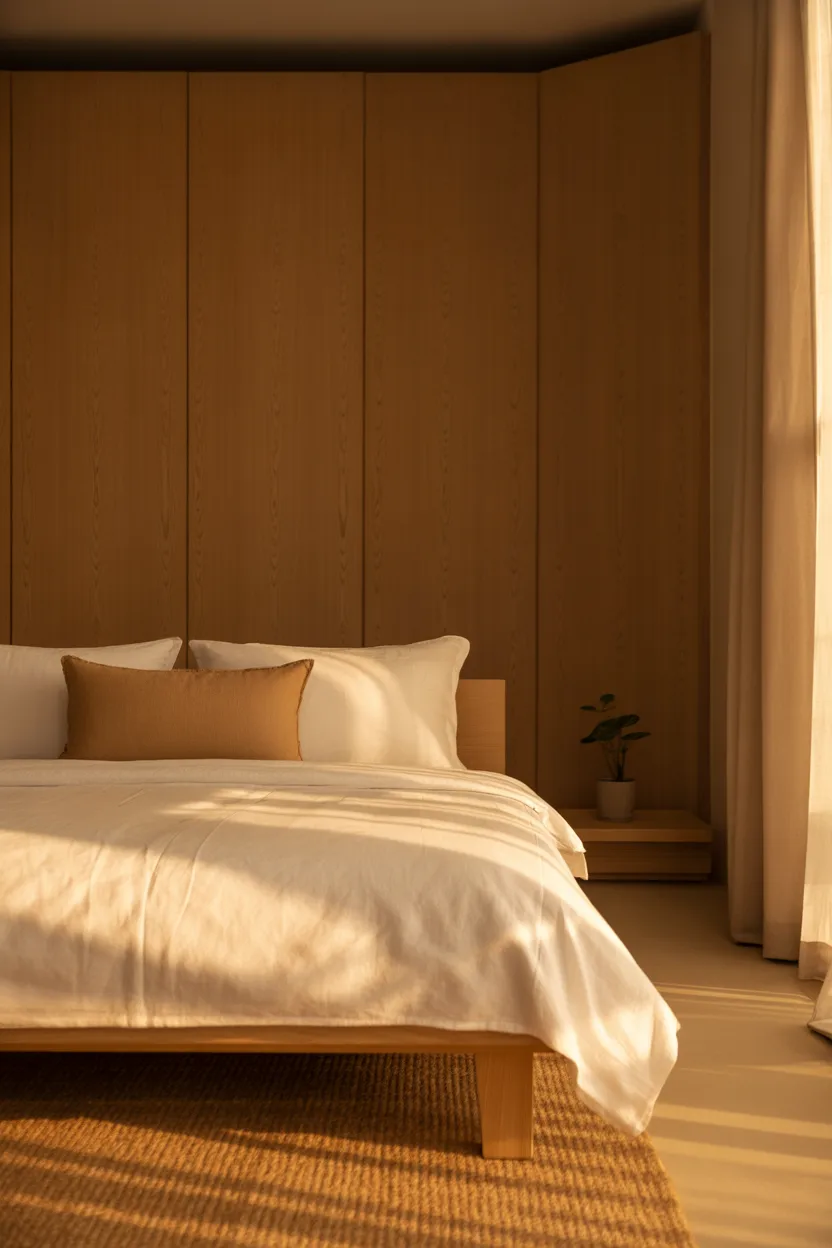
Key Design Tips:
- Use warm lamps
- Avoid harsh lighting
- Layer light sources
Explanation:
Lighting makes a cozy minimalist bedroom feel inviting.
Use Case:
Perfect for evening relaxation.
Mistakes to Avoid:
- Cold white lighting
Check bedroom lighting ideas
10. Modern Japandi Bedroom with Dark Accents
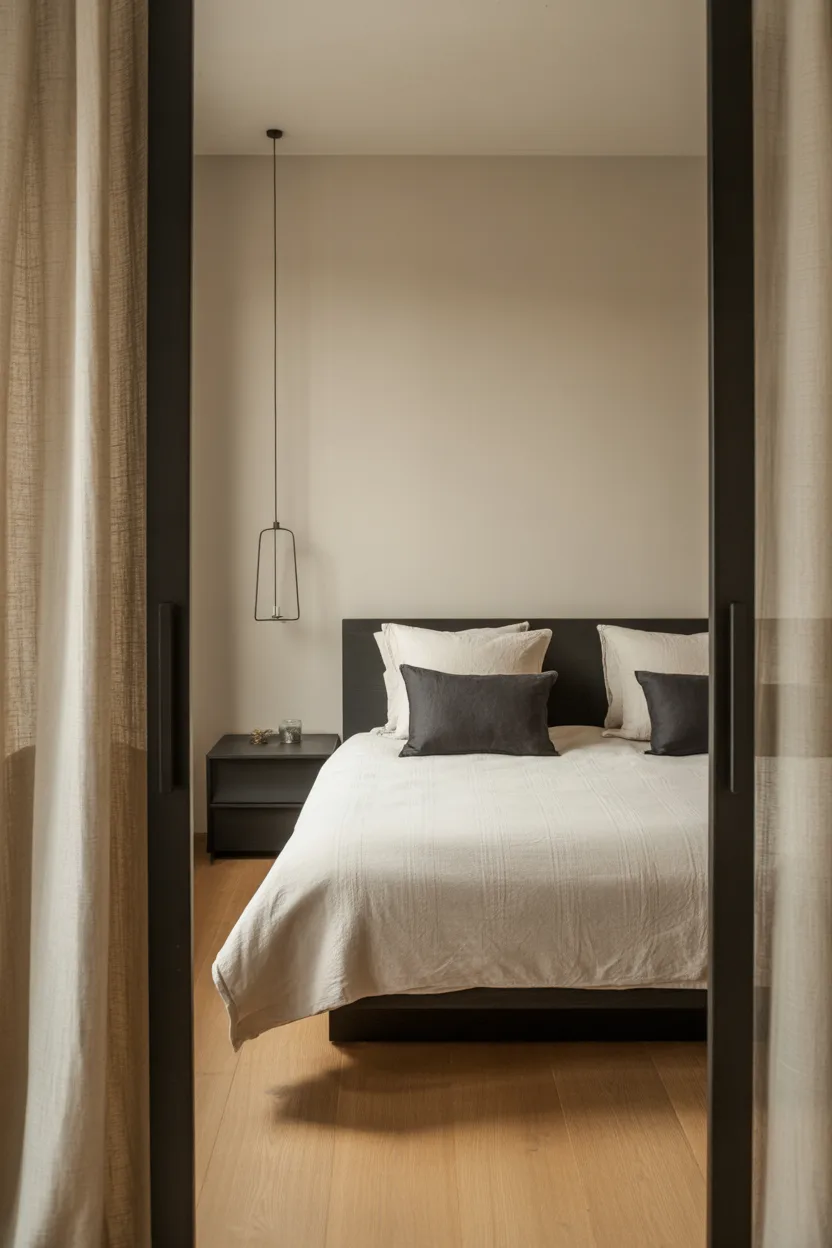
Key Design Tips:
- Add subtle black details
- Keep base neutral
- Use contrast carefully
Explanation:
Dark accents add depth to a modern minimalist bedroom design.
Use Case:
For a more modern look.
Mistakes to Avoid:
- Overusing dark tones
Explore moody bedroom ideas
11. Japandi Rooms with Functional Storage
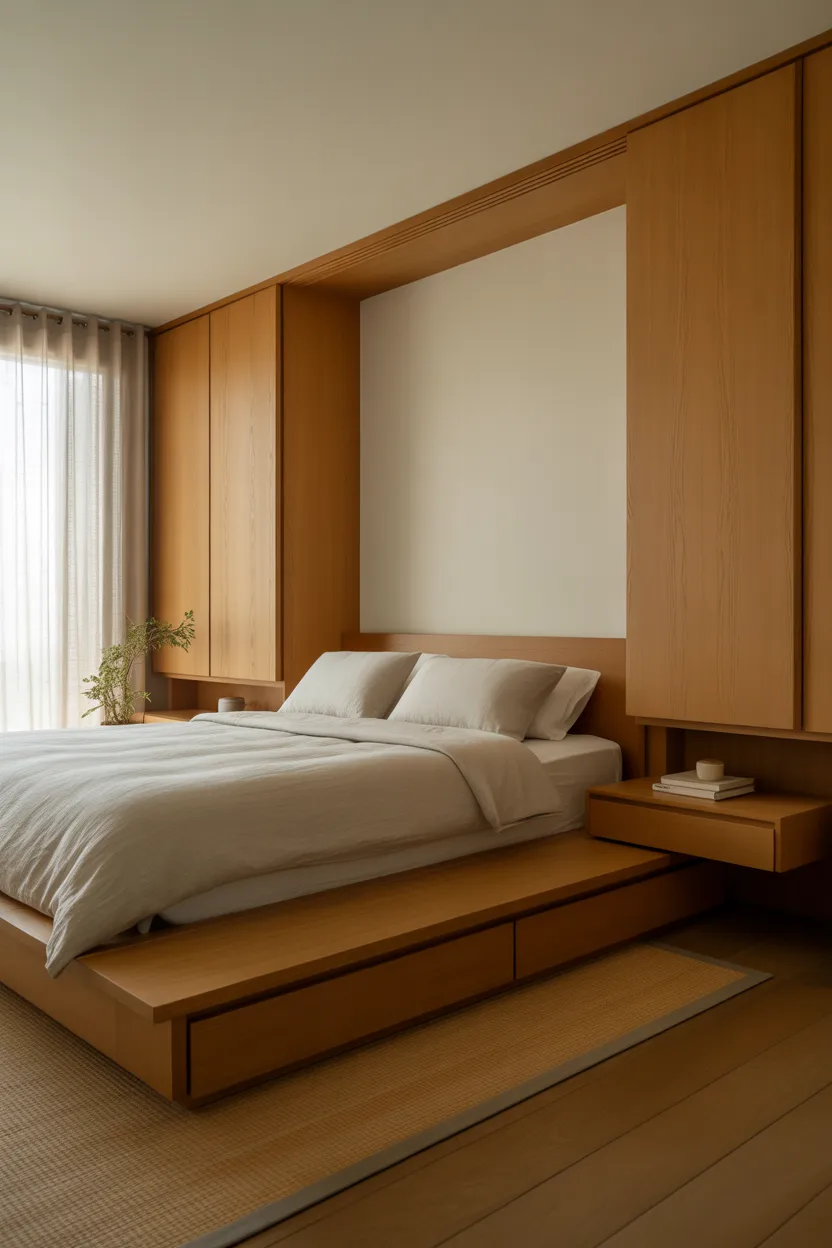
Key Design Tips:
- Use hidden storage
- Keep surfaces clean
- Choose multi-use furniture
Explanation:
Storage is key in japandi rooms to maintain calmness.
Use Case:
Ideal for small spaces.
Mistakes to Avoid:
- Visible clutter
12. Neutral Japandi Bedroom with Soft Textures
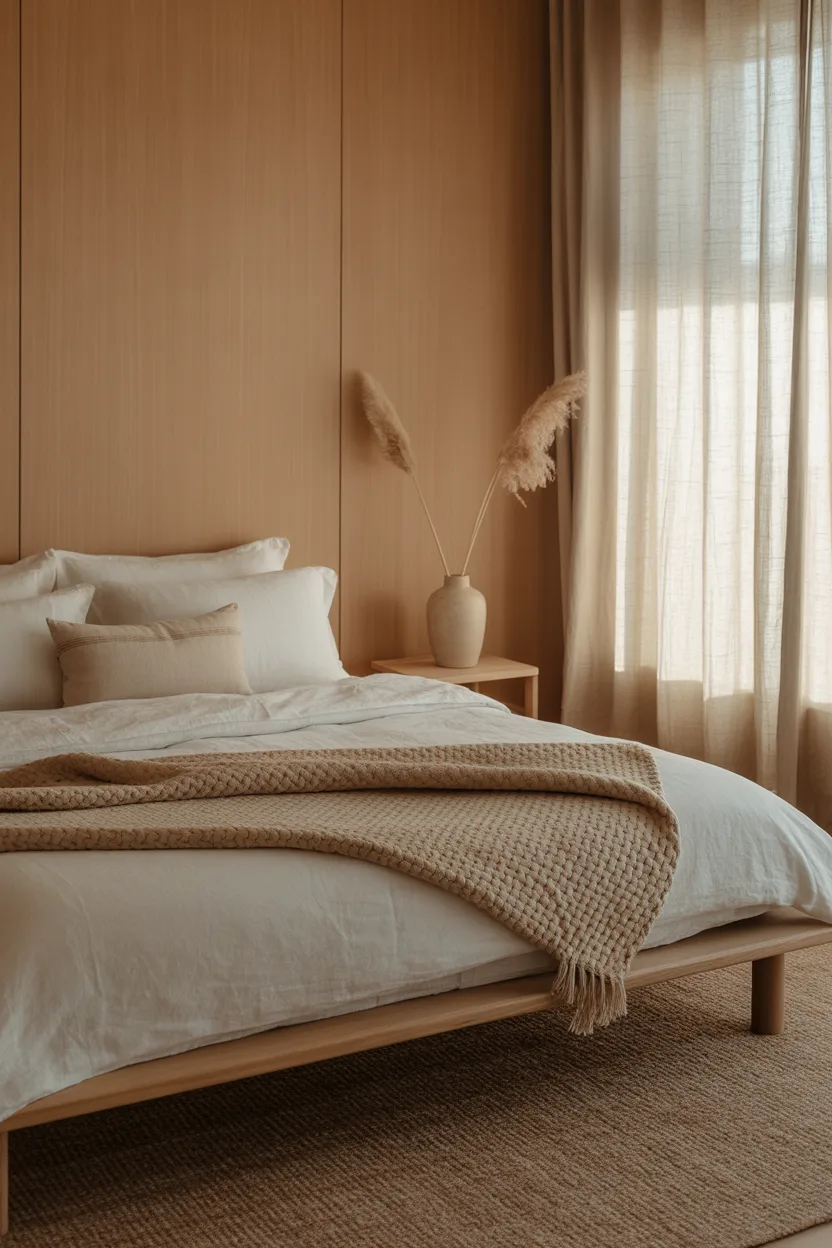
Key Design Tips:
- Use linen, wool, cotton
- Stick to neutral palette
- Add subtle layers
Explanation:
Texture replaces decoration in Japandi design.
Use Case:
Perfect for calm interiors.
Mistakes to Avoid:
- Flat surfaces
13. Japanese Minimalist Bedroom with Open Space
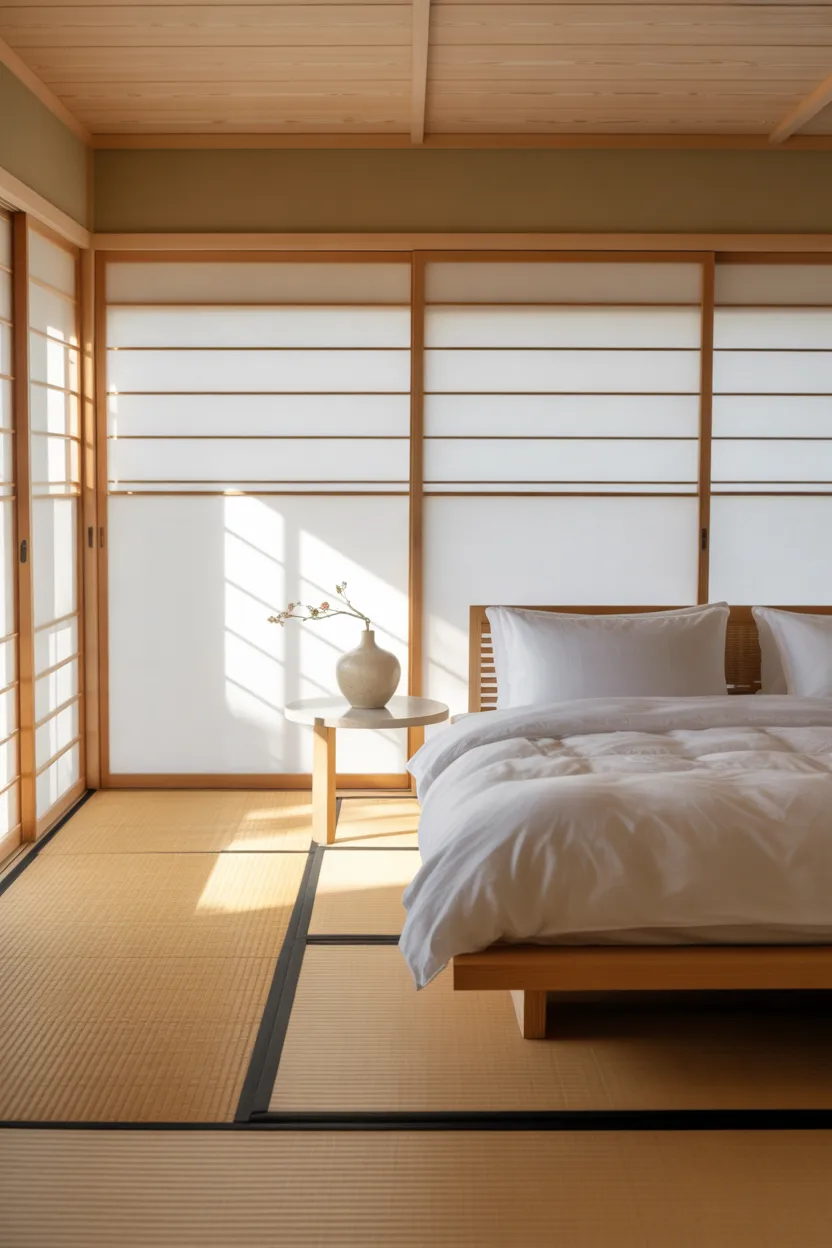
Key Design Tips:
- Keep layout open
- Use fewer furniture pieces
- Focus on flow
Explanation:
Open space creates calmness in a japanese minimalist bedroom.
Use Case:
Great for stress-free living.
Mistakes to Avoid:
- Filling space unnecessarily
14. Japandi Bedroom Inspiration with Statement Simplicity
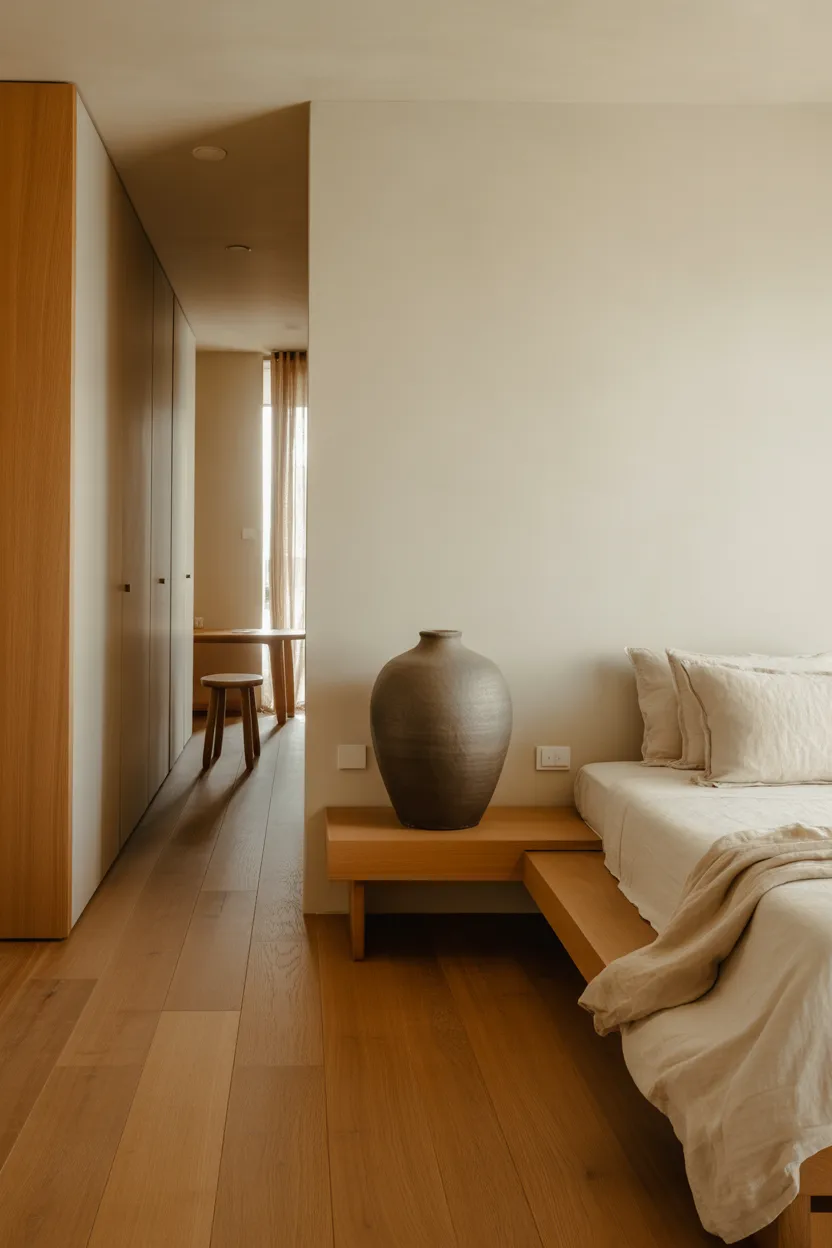
Key Design Tips:
- Add one focal piece
- Keep rest minimal
- Use subtle contrast
Explanation:
A single statement piece adds personality without clutter.
Use Case:
Perfect for balanced design.
Mistakes to Avoid:
- Multiple focal points
15. Modern Minimalist Bedroom Design with Japandi Touch
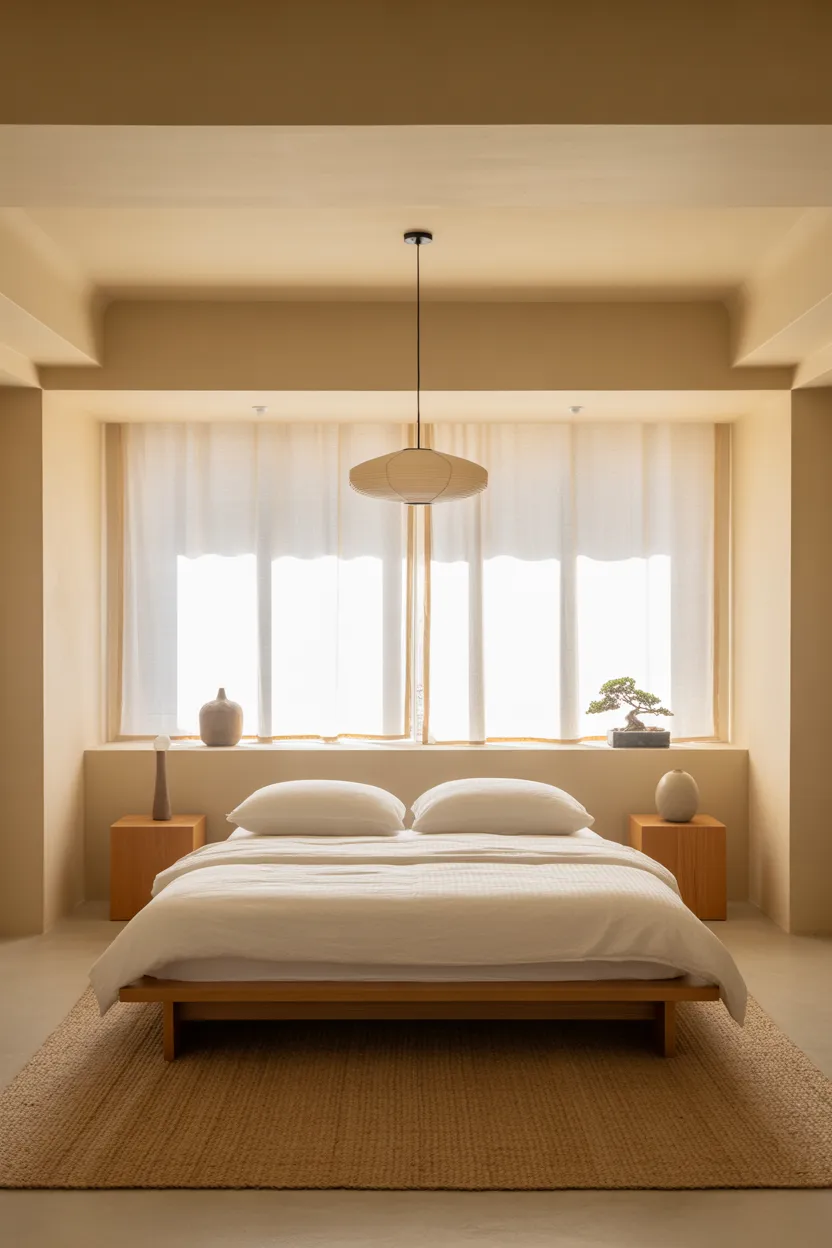
Key Design Tips:
- Combine modern lines with natural textures
- Keep palette soft
- Maintain balance
Explanation:
This hybrid style feels both current and timeless.
Use Case:
Ideal for modern homes.
Mistakes to Avoid:
- Ignoring warmth
👉 Explore
colorful minimalist bedroom ideas
Image Prompt:
Modern minimalist Japandi bedroom with clean lines, neutral tones, balanced design
16. Cozy Japandi Bedroom for Everyday Living
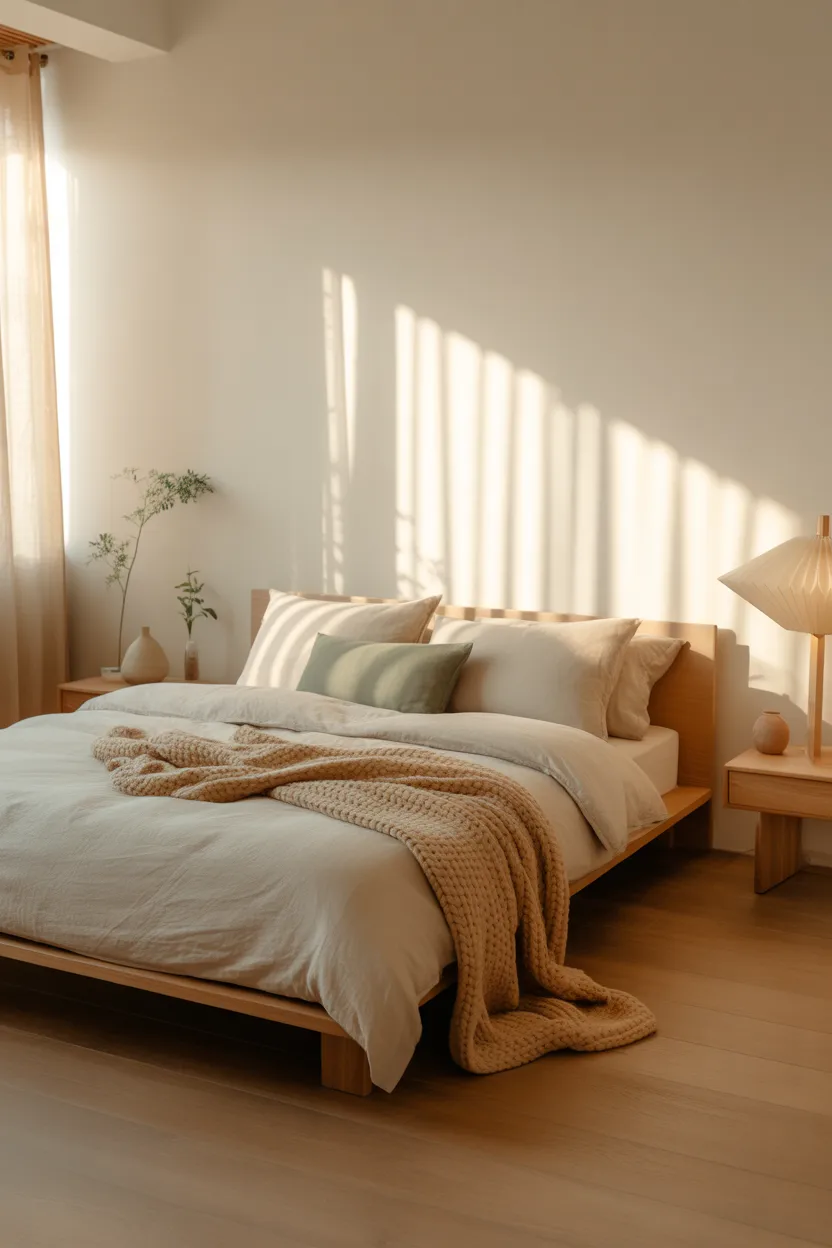
Key Design Tips:
- Add soft blankets
- Use warm tones
- Keep layout functional
Explanation:
A cozy space makes Japandi design livable, not just aesthetic.
Use Case:
Everyday comfort.
Mistakes to Avoid:
- Too rigid design
Why Minimalist Japandi Bedrooms Work So Well
This style works because it blends:
- Simplicity (Japan)
- Warmth (Scandinavia)
- Functionality (modern design)
That balance creates a space that feels calm and timeless.
FAQs
What is Japandi bedroom style?
A mix of Japanese minimalism and Scandinavian warmth.
What colors work best?
Neutral tones like beige, white, soft gray, and wood tones.
Is Japandi good for small bedrooms?
Yes, it maximizes space and reduces clutter.
How do I make my bedroom feel more Japandi?
Focus on simplicity, natural materials, and soft lighting.
Conclusion
I’ve tried strict minimalism before—and honestly, it felt cold.
But Japandi changed that.
It keeps things simple, but still warm and livable.
That’s the real secret.
If you focus on balance—not perfection—you’ll create a bedroom that actually feels peaceful every day.